Key Takeaways
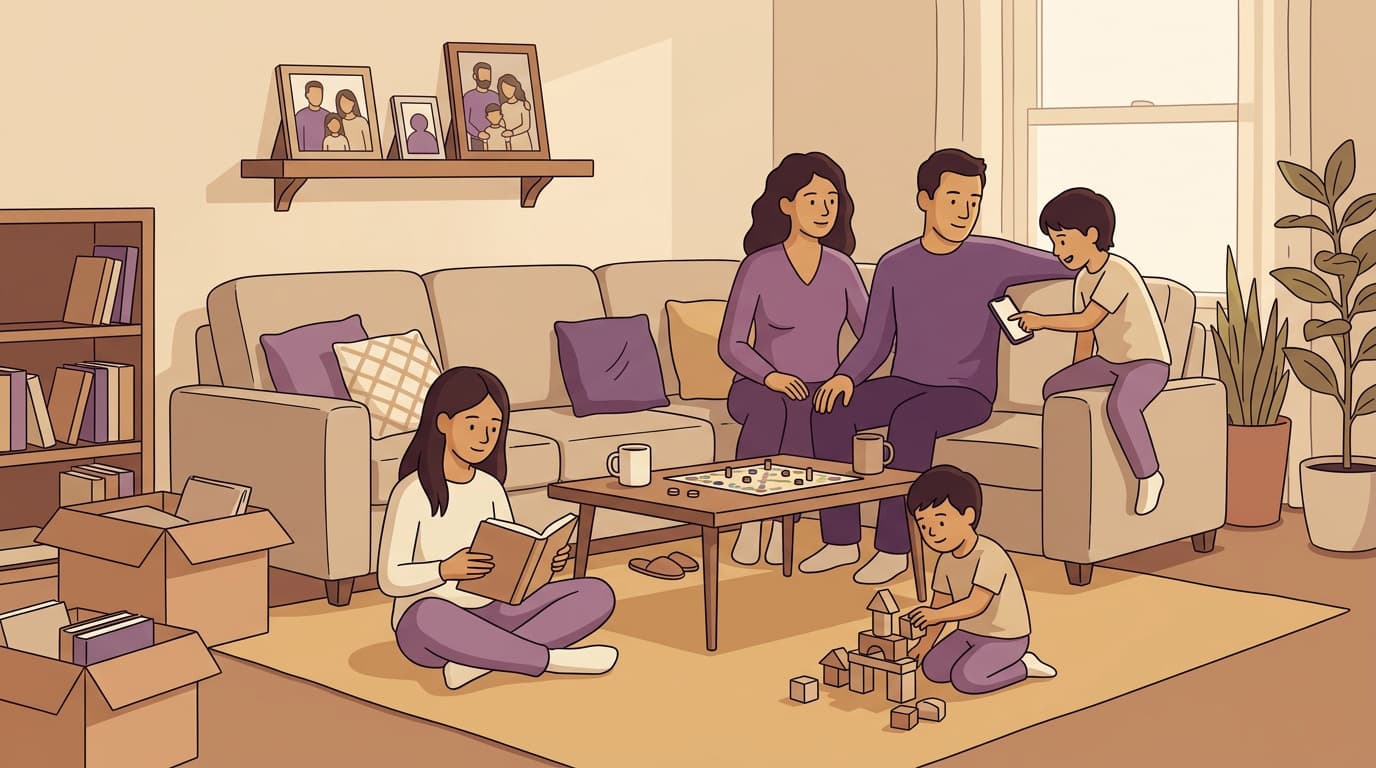
Blended families fail when couples assume they can wing it. These 40 questions cover the conversations most stepfamilies skip, from parenting roles and loyalty conflicts to money and logistics, organized by phase and designed for honest dialogue.
Blended families don't need more communication. They need different communication.
The standard relationship advice (talk more, be open, share your feelings) wasn't built for the complexity of merging two pre-existing family systems. You're not starting from a blank slate. You're walking into a situation with existing loyalties, established routines, co-parenting dynamics, and children who didn't choose any of this. The conversations you need to have aren't the same ones first-time couples have, and the stakes are higher because more people are affected by every decision.
Dr. Patricia Papernow, one of the leading researchers on stepfamily dynamics, describes the Stepfamily Cycle, a predictable progression from fantasy ("we'll be one big happy family") through immersion (the reality hits), awareness (you start understanding the patterns), mobilization (you start addressing them), and eventually action and contact (real intimacy with the new family structure). Most blended families get stuck in the immersion phase, overwhelmed by problems they didn't anticipate and don't have language for.
These 40 questions are designed to surface the conversations that matter most. They're organized into four categories: before moving in together, parenting roles and boundaries, loyalty and belonging, and finances and logistics. You don't have to get through all of them at once. Pick the ones that feel most urgent, and work through the rest over time.
The best way to use these: set aside time with your partner (not during a crisis, not with kids present), pick a few questions, and take turns answering. Listen more than you respond. The goal isn't to agree on everything immediately. It's to understand where you each are so you can build alignment deliberately. For a structured approach to these conversations, the speaker-listener format keeps things productive.
Questions before moving in together
Moving in together is a bigger transition for blended families than for first couples. You're not just merging two adults. You're merging routines, parenting styles, household cultures, and children's sense of security.
-
What does a typical weekday look like in your household right now, and what parts of that are non-negotiable for your kids?
-
How will we handle the physical space: do kids get their own rooms, shared rooms, or spaces at both homes? How do we make sure no child feels like a guest?
-
What are your house rules, and which ones are you willing to flex on? Which ones aren't up for discussion?
-
How will we handle mornings, bedtime routines, and mealtimes? Where do our current approaches clash?
-
What's your relationship with your ex like, and how much will they be part of our daily logistics?
-
How do you want to handle it if my kids don't like your kids (or vice versa)?
-
What's the timeline we're each imagining? Are we aligned on when this happens, or is one of us feeling rushed?
-
How do your kids feel about this move? Have you asked them directly, and do you trust their answer?
-
What's your biggest fear about moving in together? What's the scenario that keeps you up at night?
-
What does "success" look like for our blended family in one year? In five?
Questions about parenting roles and boundaries
This is where most blended families hit the wall. The stepparent role is genuinely ambiguous: you're not a parent, not a friend, not a babysitter, and there's no cultural script for what you actually are. Getting aligned on this early prevents the most painful conflicts.
-
What role do you want me to play with your kids right now? Not eventually, right now, in this phase.
-
Who handles discipline for whose kids? If my child breaks a rule, do you address it directly or come to me?
-
How will we handle it when we disagree on a parenting decision in front of the kids?
-
What's the boundary around my relationship with your ex when it comes to the kids: school events, medical decisions, schedule changes?
-
How will we handle it if one of the kids says, "You're not my real mom/dad"? (Because they will.)
-
What parenting decisions are mine alone, what are yours alone, and what do we make together?
-
How do you feel about me giving your kids instructions, correcting their behavior, or setting expectations for them?
-
If your child and I have a conflict, what do you need from me? What do I need from you?
-
How do we make sure each biological parent still gets one-on-one time with their own kids?
-
What's your stance on the word "step-parent"? Do we use it, avoid it, or let the kids decide what to call me?
Questions about loyalty and belonging
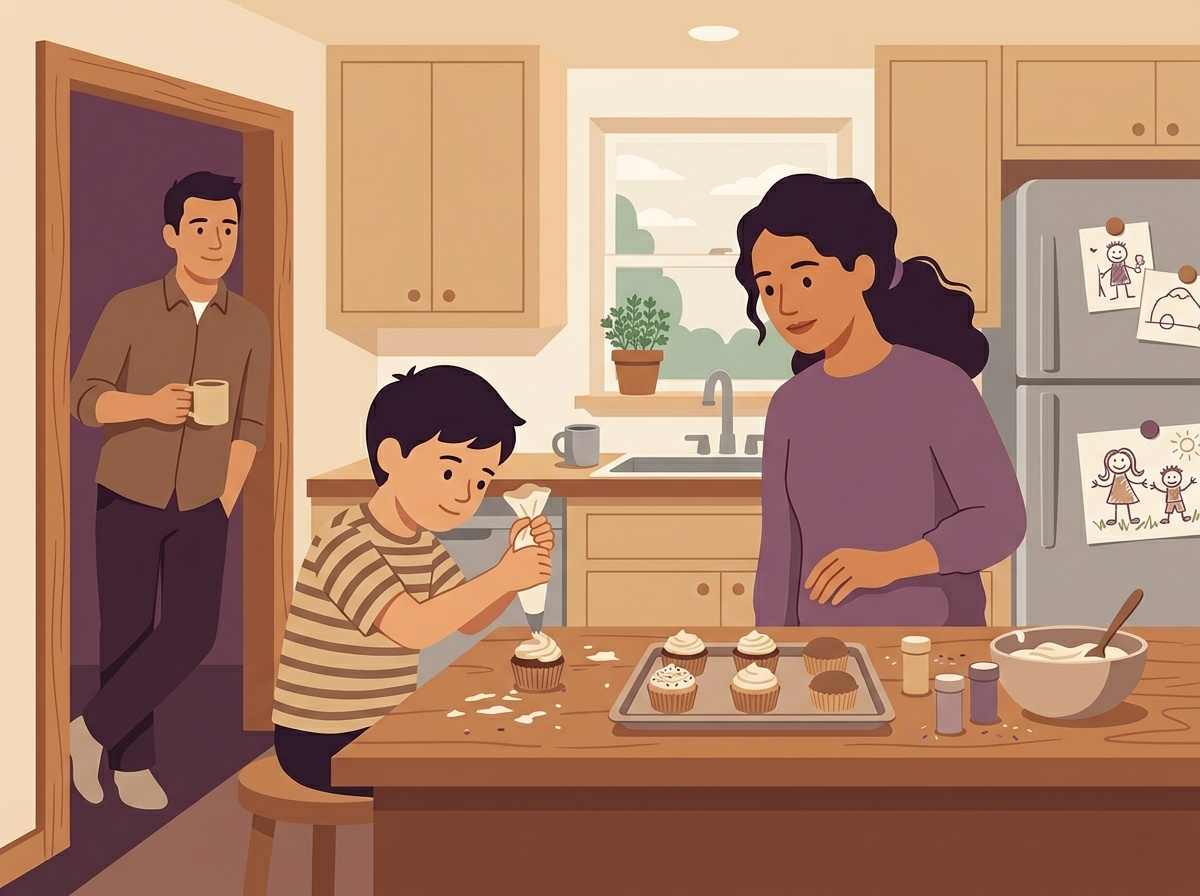
Loyalty conflicts are the invisible architecture of blended families. Children feel torn between parents. Partners feel torn between their kids and their spouse. Biological parents feel guilty for "replacing" the other parent. These questions surface what's usually unspoken.
-
When your child is upset about our family arrangement, how do you want to handle it: together, or do you need to handle it alone with them?
-
How will we navigate holidays, birthdays, and traditions without making anyone feel like they lost theirs?
-
What traditions from your previous family do you want to keep? What new ones do you want to create together?
-
How do you feel about your kids forming a genuine bond with me? Does that feel like a gift or a threat to your role?
-
How will we handle it when one child gets something the others don't (a trip with the other parent, a gift, an experience)?
-
If your ex says something negative about me to the kids, what's the plan?
-
How do we talk about the other parent in our home? What's the baseline respect level, even when we're frustrated?
-
Do you ever feel like you have to choose between me and your kids? What does that feel like?
-
How will we make sure "our" time as a couple doesn't make the kids feel abandoned or deprioritized?
-
What's the story we tell about our family? How do we frame who we are to the kids, to extended family, to the world?
These are hard questions. They sit at the intersection of love, guilt, loyalty, and identity. Papernow's research shows that couples who address loyalty conflicts directly, rather than pretending they don't exist, build stronger stepfamilies. The discomfort is the work.
If you're looking for a question pack designed specifically for this territory, the Blended Families & Co-Parenting pack goes deeper into these themes.
Questions about finances and logistics
Money in blended families is loaded with meaning. It's tied to fairness (real and perceived), to obligations that predate the relationship, and to children who have no say in the financial arrangements that affect them. These conversations are essential and almost always uncomfortable. Our money talk guide covers the general principles, but blended families need specificity.
-
How do we handle finances: fully merged, partially merged, or separate? What feels fair and what feels risky?
-
How do child support and alimony factor into our shared budget? Is that money "ours" or "yours"?
-
Who pays for what when it comes to kids' expenses (school, activities, clothing, medical)? Does it differ by whose biological child it is?
-
How do we handle the disparity if one partner's kids have more financial resources from the other parent than the other partner's kids?
-
What happens to our assets if something happens to one of us? Have we updated wills, beneficiaries, and guardianship documents?
-
How do we save for college or future expenses across multiple kids who may have different financial support structures?
-
What's the agreement around gifts: same budget per kid, or does each parent handle their own kids?
-
If one child's needs become significantly more expensive (therapy, medical, tutoring), how do we absorb that?
-
How do we handle it when the ex's financial decisions affect our household (late child support, unexpected expenses they pass along)?
-
What's our long-term financial plan, and does it account for the reality that blended families have more financial complexity than first families?
How to use these questions
Don't treat this as a quiz to get through. These are conversation starters, not interview questions. Some will spark a five-minute exchange. Others might open a two-hour discussion that you need to continue over multiple sessions.
A few guidelines:
Take turns going first. The person who answers first shapes the conversation. Alternate so neither partner is always reacting to the other's frame.
Write down your agreements. Not in a legalistic way, but blended family conversations cover a lot of ground, and it's easy to think you agreed on something that each person remembers differently. A shared document or even a notes app with key decisions prevents "that's not what we said" conflicts.
Revisit quarterly. Blended families evolve. What works when the kids are 8 won't work when they're 14. The move-in questions have a shelf life. Circle back to the questions that matter most as circumstances change.
Don't expect alignment on everything. You won't agree on all of this. That's normal. The goal is to know where you differ so you can work on those gaps intentionally rather than discovering them during a crisis.
For the conversations that feel too big to handle alone, having a framework helps. The questions before moving in post covers the general version, and hard conversations without fighting gives you the structural techniques to keep these discussions productive.
Frequently Asked Questions
How long does it take for a blended family to feel like a real family?
Papernow's research suggests 4-7 years for most stepfamilies to reach what she calls the "contact" stage, meaning genuine intimacy and a shared family identity. That's longer than most people expect, and knowing the timeline helps manage expectations. It doesn't mean those years are miserable. It means the deep sense of "we are a family" takes time to build, and that's normal.
What's the biggest mistake blended families make?
Trying to force the "one big happy family" narrative too quickly. When stepparents push for closeness before trust is established, or when biological parents pressure their kids to accept the new partner as a parental figure, it backfires. Children need time, space, and permission to develop relationships at their own pace. Patience isn't passive. It's strategic.
Should stepparents discipline stepchildren?
Not initially, and only with explicit agreement from the biological parent. Papernow and other researchers consistently recommend that in the early stages, discipline comes from the biological parent while the stepparent builds rapport. Over time, as the relationship develops trust, the stepparent can take on more authority, but this should be gradual, discussed between the adults, and responsive to the child's comfort level.
How do you handle different parenting styles between households?
You can't control what happens in the other parent's home, and trying to will drive you crazy. Focus on consistency within your household. Kids can adapt to different rules in different places (they already do this at school vs. home). What matters is that the rules in your home are clear, consistent, and agreed upon by both adults who live there.
When should a blended family consider therapy?
Before things get bad, ideally. A therapist who specializes in stepfamily dynamics can help you anticipate problems, build communication frameworks, and address loyalty conflicts before they calcify. If you're already in conflict, particularly if it involves the children's wellbeing, sooner is better than later.
Blended families are hard not because the people in them are flawed, but because the structure itself is genuinely complex. The couples who build something strong are the ones who talk about the hard stuff early and keep talking as things change. If you want a daily practice for staying connected through it all, Aperi delivers one question a day designed to keep couples talking honestly, about the stuff that matters and the stuff that's easy to avoid.
Aperi: one question a day
A daily question app that adapts to you and your partner, and goes deeper the more you use it.


Free to start. Available on iPhone and Android.
Explore question packs
Related articles
Introducing your partner to your family
Introducing your partner to your family is high-stakes. How to prepare, manage expectations, and handle it when things go wrong.

68 questions to reconnect with your partner, from safe to close
Questions to reconnect with your partner when things feel distant: 68 questions sequenced from easy to close, because the way back is small, not dramatic.
50 couples therapy questions, in the order a therapist would ask them
50 couples therapy questions sequenced like a real session: history, patterns, needs, repair, future. Plus an honest look at when a list is not enough.
Questions for couples who feel stuck
30 questions for couples who feel stuck, organized by difficulty. Start with safe questions and work toward the things you have been avoiding.

Questions to ask your partner about their childhood
35 questions to ask your partner about their childhood, from happy memories to family dynamics. Plus tips on how to listen well when the answers get heavy.
Questions for LGBTQ+ couples that straight advice doesn't cover
Most relationship advice assumes a straight template. These questions cover what LGBTQ+ couples actually deal with: identity, chosen family, new rituals.