Key Takeaways
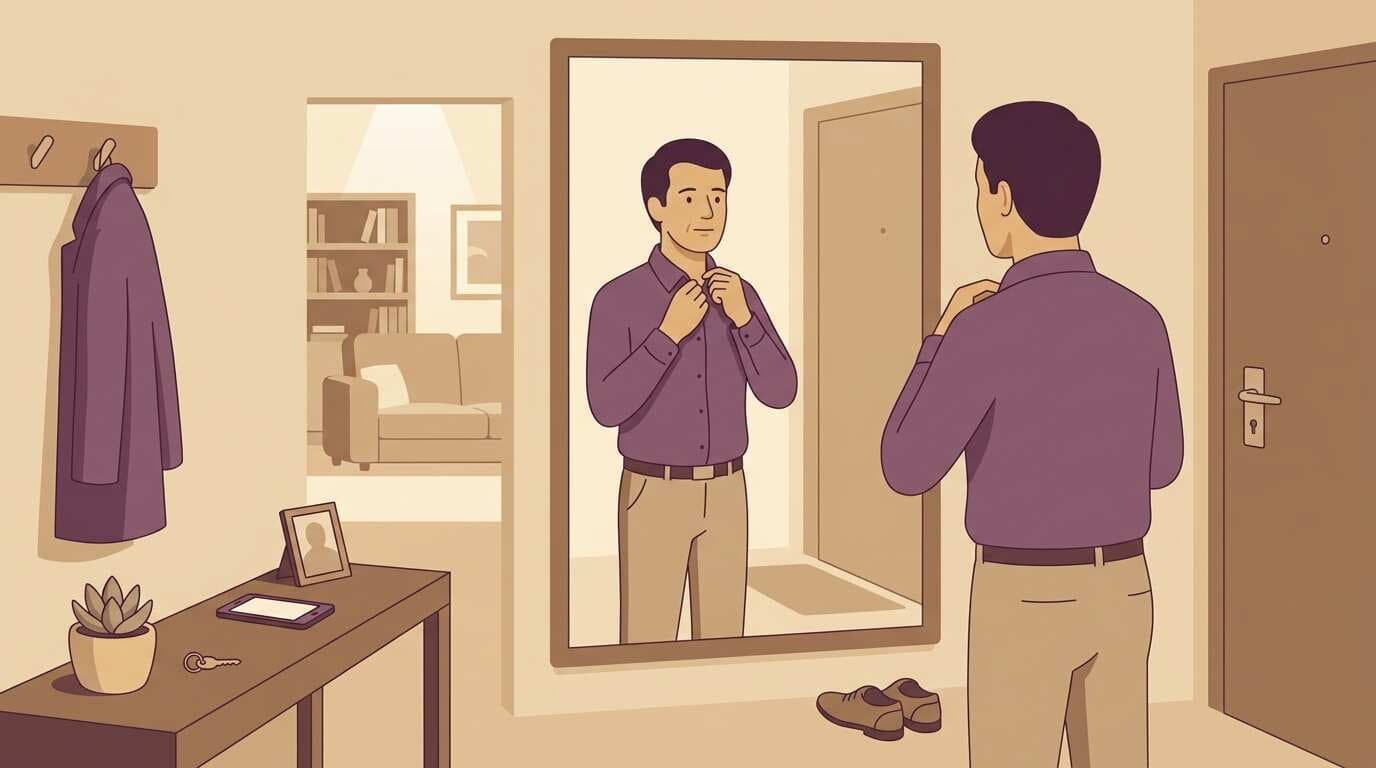
Post-divorce dating requires honest self-reflection, not just a waiting period. Hetherington's research shows most people adjust within 2-3 years, but readiness varies wildly. Divorce temporarily shifts your attachment style, old patterns resurface in new relationships, and the comparison trap is real. The advantage: you know yourself better now. The risk: you don't use that knowledge.
The question everyone asks after a divorce is "when should I start dating again?" The honest answer is: that's the wrong question. The right question is "what do I need to understand about myself before I bring another person into my life?"
Timing matters less than readiness. And readiness isn't a feeling. It's a set of skills and self-awareness that you either have or you don't, regardless of whether your divorce was finalized six months ago or six years ago.
Is there a "right" timeline for dating after divorce?
No. But that doesn't stop everyone from having an opinion about yours.
E. Mavis Hetherington, a developmental psychologist at the University of Virginia, conducted one of the most comprehensive longitudinal studies on divorce ever published. She followed nearly 1,400 families over three decades. Her 2002 book "For Better or For Worse" found that most people reach emotional adjustment within two to three years after divorce. But "most" hides enormous variation. Some people were functional and ready for a new relationship within months. Others were still stuck in anger or grief a decade later.
The timeline depends on factors that are deeply individual: how long you were married, whether the divorce was your choice, whether there was betrayal, how much of your identity was wrapped up in the marriage, and what your support system looks like. A two-year marriage that ended mutually is a different animal than a twenty-year marriage that ended with an affair.
What the research does say clearly is that jumping into a new relationship to avoid processing the old one doesn't work. Rebound relationships can temporarily relieve loneliness, but they tend to replicate the patterns of the previous marriage because the person hasn't done the work to understand those patterns.
What should you actually process before dating again?
The uncomfortable question is: what was your role in the marriage ending? Not "who was at fault." Role. Contribution. Pattern.
This isn't self-blame. It's self-awareness. Every failed relationship has two people in it, and understanding your part is about not carrying unexamined patterns into your next relationship, not accepting all the responsibility.
Common patterns worth examining:
Conflict avoidance. Did you let things build up rather than addressing them? Did you prioritize peace over honesty? If so, you'll do it again unless you consciously change it.
Over-functioning or under-functioning. Did you carry more than your share emotionally, domestically, financially? Or did you check out and let your partner carry the weight? These patterns tend to be sticky.
Choosing partners who confirm a narrative. This is the hard one. If your ex was emotionally unavailable, is that a coincidence or a preference? If your marriage repeated dynamics from your family of origin, that's not bad luck. That's your attachment system on autopilot.
A therapist can help with this inventory, and post-divorce therapy is one of the best investments a person can make. Not because you're broken, but because you're about to enter a market where self-knowledge is the single most valuable asset you have.
How does divorce change your attachment style?
Lee Kirkpatrick and Cindy Hazan published research in 1994 showing that major relationship disruptions can temporarily alter a person's attachment style. Someone who was securely attached before the marriage might shift toward anxious attachment after a divorce, becoming hypervigilant about rejection and abandonment. Someone who was mildly avoidant might become more avoidant, having confirmed their belief that depending on people is dangerous.
The key word is "temporarily." Attachment styles are relatively stable across the lifespan, but they're not fixed. A divorce is exactly the kind of disruption that can push you into an insecure pattern, especially in the first year or two after the split.
What this means for dating: your behavior in early post-divorce relationships may not represent who you actually are. You might be more clingy, more distant, more reactive than your baseline. Recognizing this is protective. When you notice yourself texting a new person obsessively or pulling away the moment things get real, ask whether that's you or whether that's the divorce talking.
The attachment shift also affects what you're attracted to. After a marriage to someone avoidant, anxiously attached people sometimes swing to the opposite extreme and seek someone who's overwhelmingly present, which can look healthy but might actually be enmeshed. After a marriage to someone anxious, avoidant people might seek maximum independence in a new partner, confusing emotional distance with peace.
What's actually different about dating now?
Two things are different, and they pull in opposite directions.
You have more self-knowledge. You've been through a long-term relationship. You've experienced its formation, its maintenance, and its failure. You know what you need in a partner because you've felt the absence of it. You know what you can't tolerate because you tolerated it for years and watched what happened. This is genuinely valuable intelligence that people dating for the first time don't have.
You have more baggage. The self-knowledge comes bundled with scar tissue. You have triggers now. Certain phrases, certain behaviors, certain situations will remind you of your ex and produce disproportionate emotional reactions. You might flinch when someone raises their voice. You might panic when someone doesn't text back quickly. You might sabotage closeness because closeness is where you last got hurt.
The trick isn't to eliminate the baggage. It's to know what's in it. If you can say to a new partner, "I'm sensitive about this because of what I went through," you're working with your history instead of being controlled by it. If you can't name your triggers, they'll run the show.
What are the red flags you'll see now that you missed before?
Divorce sharpens your pattern recognition, if you let it. Things that seemed normal or tolerable before now stand out. The list is personal, but some common ones:
Contempt disguised as humor. Jokes at your expense, especially in front of others. If your marriage involved contempt (Gottman's single strongest predictor of divorce), you'll be sensitized to it. Trust that sensitivity.
Love-bombing. Excessive attention, gifts, declarations early on. Before your marriage, this might have felt exciting. After, you might recognize it as a control strategy or a sign that the person is performing attachment rather than building it.
Resistance to accountability. When someone can't say "I was wrong" or deflects every criticism back onto you, pay attention. You've seen where that leads.
The "my ex was crazy" narrative. Everyone's divorce is more complicated than one person being the villain. If someone describes their ex exclusively in those terms, without any self-reflection about their own role, they haven't done the work. And they'll probably describe you the same way eventually.
Moving too fast. Someone who wants to be exclusive after two dates, meet your kids after a month, or move in after three months is likely running from something, not running toward you.
How do you date when you have kids?
This adds layers of complexity that child-free dating doesn't have.
Don't introduce a new partner to your kids too early. Most child psychologists recommend waiting at least six months of consistent dating before introductions, and some suggest longer. Kids post-divorce are already managing disrupted attachment. Adding and removing new adults from their lives creates additional instability.
Your kids' other parent will have opinions about your dating. Whether those opinions are reasonable or not, they'll exist. Having clear boundaries about what information gets shared with your ex and what doesn't will prevent unnecessary conflict.
Your availability is limited. You have custody schedules, school events, bedtime routines. A partner who doesn't respect those constraints isn't a good fit. And you'll need to resist the temptation to neglect parenting time for dating excitement.
Your kids might resist. Even kids who wanted the divorce can struggle with a parent dating. It makes the end of the original family feel final. It triggers loyalty conflicts. It brings a stranger into their space. Their resistance doesn't mean you shouldn't date. It means their feelings need acknowledgment.
The balancing act is real, and there's no formula. But erring on the side of going slowly with introductions is almost always the right call.
What about the comparison trap?
Every new person will be compared to your ex, consciously or unconsciously. This is inevitable and it's a problem in both directions.
If the comparison is favorable ("this new person is so much better than my ex"), you might overlook genuine incompatibilities because the contrast is flattering. Someone who's kind seems amazing after someone who was cruel. But kindness alone doesn't make a relationship work. Make sure you're evaluating the new person on their own merits, not just on how they differ from the last one.
If the comparison is unfavorable ("my ex did this better"), you might undervalue a good partner because they don't match in areas where your marriage actually worked. Maybe your ex was an incredible cook or an amazing conversationalist. Those things were real, and it's okay to miss them while also recognizing that the marriage failed for reasons that had nothing to do with cooking or conversation.
The most insidious comparison is the idealized one. Memory edits the past. Over time, you might start remembering your marriage as better than it was, especially the early years. When the new relationship hits its first rough patch, the idealized past starts looking appealing. Remind yourself why you left.
When do old patterns show up in new relationships?
Usually around the three-to-six-month mark. The early period of a new relationship is governed by novelty, chemistry, and best behavior. Both people are showing their highlight reel. Patterns from previous relationships haven't had time to activate because the triggers haven't appeared yet.
Once the novelty fades and real life sets in, your defaults emerge. The way you handle disagreement. The way you respond to disappointment. The way you bid for attention or withdraw from it. These patterns were formed long before your marriage and they survived it.
Recognizing them in real time is the skill that makes post-divorce dating different from first-time dating. When you catch yourself shutting down during a conflict, you can say, "I'm doing the thing I always do." When you notice you're picking a fight because you're actually anxious about something else, you can name the real issue.
This self-awareness doesn't prevent the patterns. It gives you a beat between the trigger and the response. And that beat is where change happens.
What does it mean to be "ready" to date?
Not healed. Nobody is fully healed. But functional. A rough checklist:
You can talk about your ex without intense emotional charge. Not indifference. But the mention of their name doesn't ruin your afternoon.
You've identified your patterns and can name them. You know your attachment style, your conflict default, your role in the marriage's failure.
You're not dating to fill a void. You have a life that works: friends, activities, purpose. A new partner would add to it, not complete it.
You can tolerate uncertainty. Dating involves not knowing where things stand, not knowing if they'll text back, not knowing if this will work. If ambiguity sends you into a panic spiral, you might need more time.
You're willing to be vulnerable again. This is the hardest one. Divorce teaches you that vulnerability can lead to devastation. Dating requires risking it anyway.
If some of those feel true and others don't, you're probably closer to ready than you think. Readiness isn't a binary state. It's a continuum, and you'll keep moving along it as you go.
Aperi works well for people re-entering the dating world because it gives you structured, meaningful conversation starters that go deeper than small talk without being interrogative. A good question at the right moment can reveal more about compatibility in ten minutes than three dinner dates of surface conversation.
Frequently asked questions
How soon is too soon to start dating after divorce?
There's no universal answer, but there are warning signs that it's too early: you're still emotionally consumed by the divorce, you find yourself talking about your ex on every date, you're using dating to avoid grief or loneliness, or you're looking for someone to "fix" how you feel. Hetherington's research suggests most people reach a baseline of emotional stability within two to three years, but some get there faster and some take longer. The readiness checklist above is more useful than any calendar date.
Should I try dating apps or meet people organically?
Both work. Apps give you access to more people and let you filter for basic compatibility before investing time. Organic meeting (through friends, activities, community) gives you context and a built-in vetting system. Most people who date successfully after divorce use a combination. The medium matters less than your mindset. If you're bringing self-awareness and genuine curiosity to the process, it works on apps and in coffee shops.
How do I explain my divorce to someone new?
Briefly and without vilifying your ex. "We grew in different directions" or "we wanted different things and couldn't find a middle ground" is honest and sufficient for early conversations. The full story can come later, when trust has been established. If someone pushes for details too early, that's worth noting. And if you can't talk about it without anger or tears, you might not be ready for the where-is-this-going conversation that dating eventually requires.
What if I'm afraid of making the same mistake?
That fear is a feature, not a bug. It means you're taking the decision seriously. The way to use it productively is to get specific. What exactly was the mistake? Was it the person you chose, the patterns you repeated, or the things you ignored? Once you've identified the specific errors, you can watch for them. General fear ("what if I get hurt again") is paralyzing. Specific awareness ("I tend to ignore early signs of emotional unavailability") is protective.
Is it harder to find a serious relationship after divorce?
Not harder. Different. Your dating pool includes other divorced people, which means more people with self-knowledge and realistic expectations. The disadvantage is that you (and they) carry more complexity: kids, financial entanglements, emotional scars, scheduling constraints. But complexity isn't a dealbreaker. It's the price of admission for dating adults who've lived real lives.
Aperi: one question a day
A daily question app that adapts to you and your partner, and goes deeper the more you use it.


Free to start. Available on iPhone and Android.
Explore question packs
Related articles
What research says about age gap relationships
Age gap relationships attract strong opinions. What does the data actually show about satisfaction, power dynamics, and stigma?

Relationship advice for your 20s
Your 20s are when you learn how to be in a relationship. Here's what the research says about building the skills that matter.

Limerence: when new love feels like obsession
What limerence actually is, how it differs from love, why your brain acts like it has OCD, and what happens when it wears off.

Why Gen Z couples are prioritizing emotional intelligence
Gen Z entered dating with a shared vocabulary for emotional dynamics. Some of that is working well. Some is overcorrecting. A breakdown.

Relationship red flags vs. normal growing pains
Not everything uncomfortable is a red flag. Here's how to tell the difference between real warning signs and normal relationship friction.
Building self-worth that doesn't depend on your partner
When your self-worth depends on your partner's approval, every interaction becomes high-stakes. Here's how to build an internal foundation.