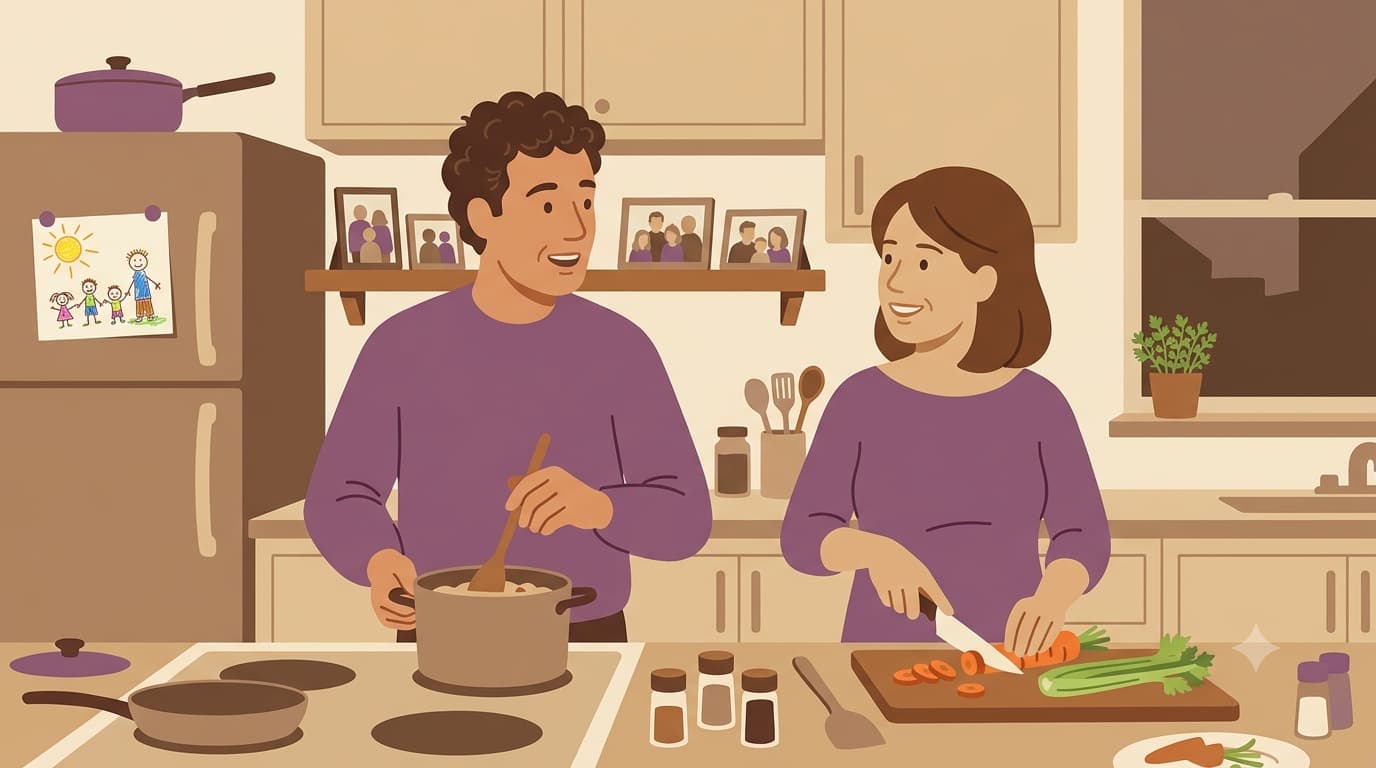
Key Takeaways
Married couples rarely stop communicating because of conflict. They stop because they get efficient: shorthand replaces sentences, prediction replaces questions, and one day the talking is mostly administration. Here's how that happens, the four patterns that predict genuine trouble, and what daily practice looks like.
In year one of a marriage, "how was the conference?" is a real question. By year ten it's often a formality, answered with "fine" while someone unloads the dishwasher, because you already know roughly what happened. Or you think you do.
That shift is the central communication problem of long marriages, and almost nobody names it, because it doesn't look like a problem. It looks like intimacy. Finishing each other's sentences, knowing the coffee order, predicting the complaint before the phone call ends. All of it real, all of it earned. But the same efficiency that makes a household run quietly erodes the asking, and asking is how two people keep up with who the other is becoming.
What the years do to how you talk
Three things happen gradually, and each one is reasonable on its own.
Shorthand replaces sentences. You develop a compressed private language for running a life together, which is genuinely one of the pleasures of marriage. The trouble is that compression works by leaving things out, and after enough years, what gets left out is everything that isn't operational.
Prediction replaces questions. Early in a marriage you ask because you don't know. Later you don't ask because you're confident you do. That confidence is usually justified about coffee orders and usually wrong about inner lives, which shift constantly and silently. Ten years in, many people are effectively married to their model of their spouse, last updated several years ago.
The backlog of assumed knowledge grows. "We've talked about this" becomes a reason not to talk about it again, even though the answer to "do you want to move abroad someday" at 29 says little about the answer at 41.
None of this involves a single fight, which is why couples in this state often say "we never argue" as though it were good news. Curiosity has a half-life in marriage, and it needs deliberate maintenance the way anything alive does.
The patterns that predict real trouble
Erosion is the quiet failure mode. The loud one is well mapped. John Gottman's decades of observational research identified four conflict patterns, the Four Horsemen, that predict divorce with unsettling accuracy: criticism (attacking character instead of raising a behavior), contempt (mockery, sneering, eye-rolling, the strongest single predictor of the four), defensiveness (meeting every complaint with a counter-complaint), and stonewalling (shutting down entirely, usually from physiological overwhelm).
Each has a documented antidote: complaints framed as needs, a deliberate culture of appreciation, taking responsibility for even a slice of the problem, and structured breaks with a promised return. How to fight fair walks through them in practice.
Gottman's other famous number belongs here too. In stable marriages, positive interactions outnumber negative ones by about five to one during conflict. Treat that less as a scoreboard to run and more as a pointer to something true: the everyday texture of warmth is what makes hard conversations affordable. Couples with a full account can spend from it; couples running on empty can't raise the smallest thing without it tipping over.
The quiet failure and the loud one feed each other. Efficiency thins the positive texture, the thinned texture makes conflicts sharper, sharper conflicts make honesty feel expensive, and the shorthand deepens. Which is why the repair rarely starts with conflict skills. It starts with the daily layer.
What daily practice looks like
Marriage communication tips tend to describe summit meetings: the scheduled deep talk, the weekend retreat, the big conversation about the relationship. Those have their place, and the daily layer matters more, because marriages are lived daily.
Protect ten minutes with no logistics. Not "we should talk more," which is unfalsifiable, but a specific slot (the after-dinner walk, the first coffee) where kids, money, and calendars are off-topic. What's left when logistics are banned is, at first, awkward silence, and then conversation.
Swap one closed question for an open one. "Good day?" invites one word. "What was the most annoying part of your day?" invites a story. If you've run out of open questions after fifteen years, that's normal; questions for long-term couples exists because everyone runs out.
Say the appreciation out loud. Most spouses notice far more than they mention. Research by Kumar and Epley on expressed gratitude found that people underestimate how much their expression means to the receiver and overestimate how awkward it will feel, so the thought stays unspoken and the account stays empty. The fix is embarrassingly simple: say the nice thing you just thought.
Respond to bids. Gottman's research on bids for connection found that couples who last turn toward these small overtures (the "look at this," the sigh, the offered article) at much higher rates than couples who split. Bids look trivial, which is the trap. Each one is a small test of whether reaching out still works.
If the muscle is stiff after years of shorthand, structured practice helps more than good intentions: communication exercises for couples collects ones that don't feel like homework.
Scripts for three recurring moments
Raising an issue. Conversations tend to end the way they begin, so the opening sentence deserves thirty seconds of thought. "I feel stretched thin with how we're splitting the mornings. Can we figure out something better together?" starts a negotiation. "You never handle the mornings" starts a trial. Same grievance, different marriage.
The flooded pause. When your heart rate spikes and your answers turn to concrete, say so before the shutdown: "I care about this and I'm too worked up to do it well. Give me twenty minutes and I'll come back." Then come back. The return is what makes the pause a tool instead of an exit.
The curiosity reboot. On a walk, without preamble: "What's been on your mind lately that we haven't talked about?" Then ask it like you don't know the answer, because you don't. This is the single cheapest intervention for the model-gone-stale problem, and the full toolkit for conversations like it is in how to communicate better.
A standing interruption of the shorthand
Curiosity in a long marriage does better with infrastructure than with resolve. Aperi is that infrastructure at its smallest: one question a day, picked for the two of you, which you each answer before either can read the other's. The early questions are light; they deepen as your answers show you're ready for more. For a marriage that has gotten efficient, it works as a daily, minor, pleasant interruption of the shorthand. Which is exactly what shorthand needs.
FAQ
How can married couples improve communication? Start with the daily layer rather than the crisis layer: protect ten minutes a day with no logistics, replace one closed question with an open one, and say appreciations out loud instead of just thinking them. In conflict, learn to recognize criticism, contempt, defensiveness, and stonewalling early, and use their antidotes: needs instead of accusations, appreciation, partial responsibility, and pauses with a promised return.
What does poor communication in marriage look like? Usually efficiency taken too far: conversation reduced to logistics, questions answered by prediction instead of asking, appreciation felt but unspoken, and disagreements that either detonate or go underground. The louder form shows up as Gottman's four patterns (criticism, contempt, defensiveness, stonewalling), which are strong predictors of divorce when they become the default conflict style.
How much should married couples talk each day? There's no magic number, and minutes are the wrong unit. Ten minutes of genuine exchange, questions asked without knowing the answers, beats two hours of parallel phone-scrolling with commentary. A workable daily floor is one real question, one real answer from each of you, and one appreciation said out loud.
Is it normal to run out of things to say after years of marriage? Completely normal, and not evidence of a failing marriage. It usually means the asking stopped, not that the material ran out. People keep changing at every age, so a spouse of fifteen years contains plenty you haven't heard; the shorthand of a shared life just stops surfacing it. Deliberate questions, a daily prompt, or structured exercises restart the flow faster than waiting for spontaneous conversation to return.
Aperi: one question a day
A daily question app that adapts to you and your partner, and goes deeper the more you use it.


Free to start. Available on iPhone and Android.
Explore question packs
Related articles
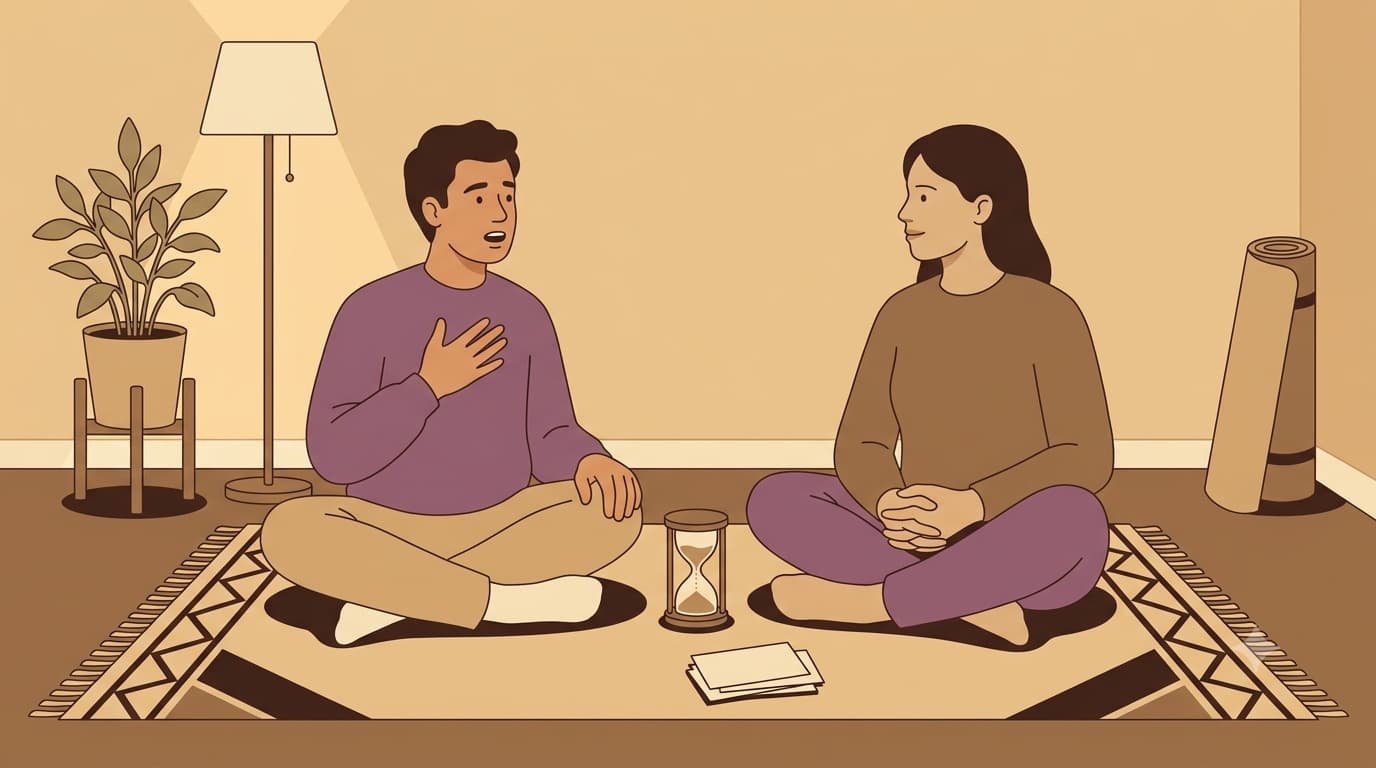
11 marriage communication exercises worth the awkwardness
Marriage communication exercises that work like practice: 11 concrete drills with instructions, time required, and what each one trains.
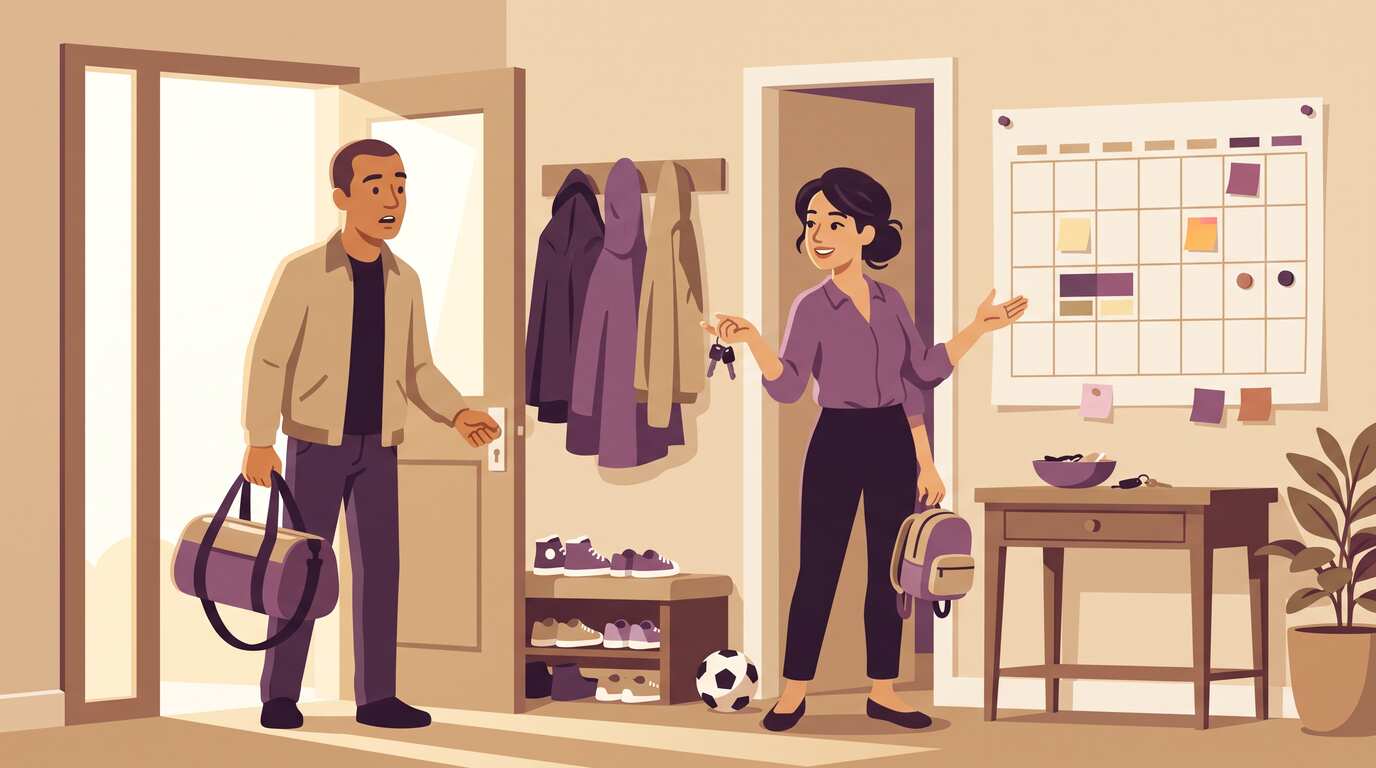
Creating a shared calendar that works for your relationship
A shared calendar isn't just logistics. It's the difference between 'I told you about that' and actually being on the same page.
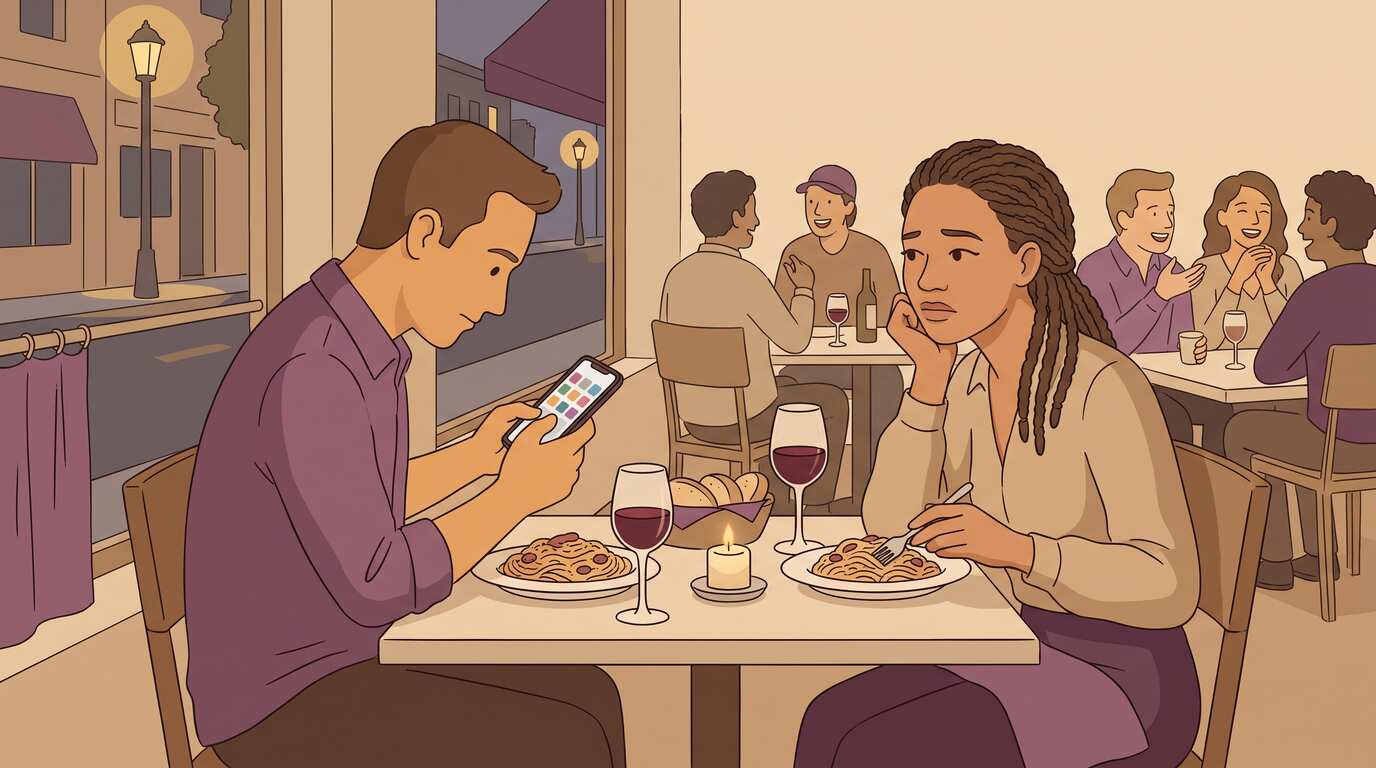
Social media rules for couples
Social media creates real relationship problems. Research-backed rules for handling posts, exes, and phone time together.
Introducing your partner to your family
Introducing your partner to your family is high-stakes. How to prepare, manage expectations, and handle it when things go wrong.
Writing a love letter that doesn't sound cheesy
Most love letters fail because they're too generic. A framework for writing one that actually means something.

Traveling together without fighting
Travel should bring you closer. Instead, it stress-tests your relationship. Here's how to stop fighting about maps, money, and packing.