Key Takeaways
Introversion and extroversion aren't about shyness or friendliness; they're about stimulation thresholds. Couples with opposite orientations face predictable conflicts around social calendars, alone time, and emotional expression, but the research on whether similarity or complementarity predicts satisfaction is mixed. What matters most is understanding the biology behind your partner's needs and building systems that honor both.
You fell in love with the thing that now drives you crazy.
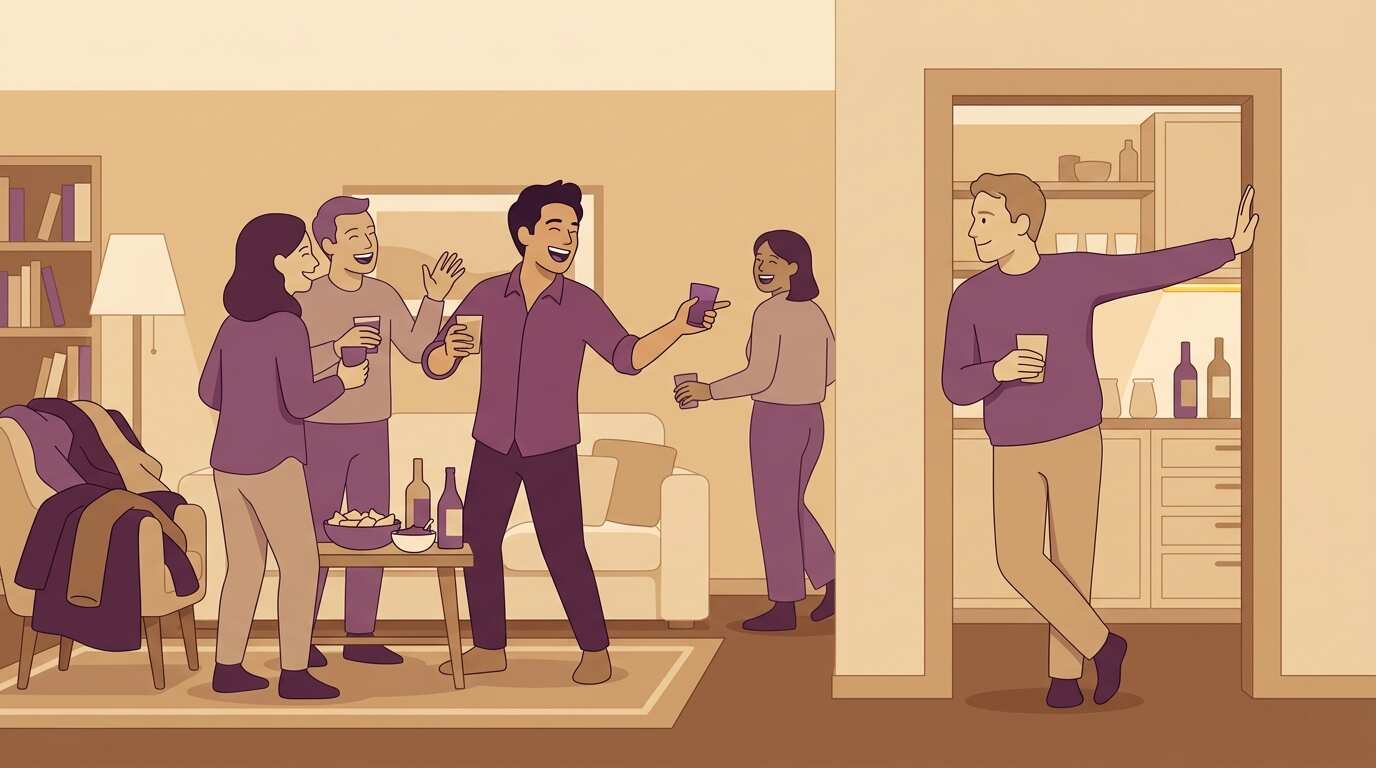
The extrovert loved how the introvert listened deeply, stayed calm in chaos, seemed so self-contained and mysterious. The introvert loved how the extrovert pulled them out of their head, made everything an adventure, seemed so effortlessly comfortable in any room. Fast forward two years and the extrovert is hurt that their partner would rather read than go to a party, while the introvert is exhausted from the third social obligation this week.
This is one of the most common personality-based conflicts in relationships. And most of the popular advice about it is wrong, because most people misunderstand what introversion and extroversion actually are.
What do introversion and extroversion actually mean?
Carl Jung first described these orientations in 1921, but his framework was philosophical and imprecise. The modern understanding owes more to Hans Eysenck, who in the 1960s proposed that introversion and extroversion are rooted in baseline levels of cortical arousal. Introverts, Eysenck argued, have higher baseline arousal: their brains are already more stimulated at rest. Extroverts have lower baseline arousal and seek external stimulation to reach an optimal level.
This is biology, not personality as most people think of it.
An introvert doesn't avoid parties because they're shy or antisocial. They avoid them because three hours of loud music and small talk pushes their nervous system past the point of comfort. An extrovert doesn't seek constant socializing because they're shallow or needy. They seek it because quiet environments leave them feeling understimulated and restless.
In the Big Five personality framework, which is the current standard in personality research, extroversion encompasses warmth, gregariousness, assertiveness, activity level, excitement-seeking, and positive emotionality. It's a spectrum, not a binary. Most people fall somewhere in the middle, what some researchers call "ambiverts," but couples at opposite ends of the spectrum experience specific, predictable friction.
The distinction matters because when you frame your partner's needs as a personality quirk, you can dismiss them. When you understand them as a neurological reality, you start taking them seriously.
Why do opposites attract in the first place?
Arthur Aron's self-expansion model offers the best explanation. Aron's research, conducted over decades at Stony Brook University, shows that people are drawn to partners who expand their sense of self, who offer access to experiences, perspectives, and capacities they don't have on their own.
For an introvert, an extroverted partner represents access to social confidence, spontaneity, and a wider world. For an extrovert, an introverted partner represents depth, calm, and the kind of focused attention that feels rare. Each person gains something they couldn't easily build alone.
This is why the early relationship feels so electric. The introvert goes to the party and actually has fun because they're with someone who handles the social logistics. The extrovert has a long, quiet dinner conversation and discovers they love it. Both people are growing, and growth feels like love.
The problem is that self-expansion has diminishing returns. Once you've absorbed what your partner offers, the differences that felt exciting start feeling like obstacles.
Does personality similarity actually predict relationship satisfaction?
The answer is frustratingly complicated. David Watson and colleagues published a key study in 2004 examining personality similarity in married couples. They found that similarity on most Big Five traits — including extroversion, had little to no correlation with relationship satisfaction. What mattered more was each person's individual personality traits. Agreeable people had better relationships regardless of their partner's agreeableness. Neurotic people had worse ones regardless of their partner's neuroticism.
But other research tells a different story. Gonzaga, Campos, and Bradbury (2007) found that similarity in positive emotionality, a subcomponent of extroversion, did predict satisfaction, particularly in the long term. And a meta-analysis by Malouff and colleagues (2010) found that while personality similarity has a small overall effect on relationship quality, the effect of individual traits is much larger.
What does this mean for introvert-extrovert couples? It means the combination isn't inherently doomed or inherently blessed. What matters is how you handle the specific friction points.
What are the real friction points?
They're predictable, and they tend to cluster around three areas.
The social calendar. This is the most visible conflict. The extrovert wants to go out Friday, see friends Saturday, attend a brunch Sunday. The introvert wants maybe one of those things and needs the rest of the weekend to recharge. Neither person is being unreasonable. They literally need different things to function.
The fight is usually about the pattern, not any single event. The extrovert feels like they're always being told "no." The introvert feels like they're always being asked for more than they can give. Both people start keeping score, which is toxic in any relationship but especially destructive here because the score will never balance. Your energy needs aren't negotiable.
Processing speed and style. Introverts tend to process internally before speaking. Extroverts tend to process by speaking out loud. This creates a mismatch in conversations, especially difficult ones. The extrovert brings up an issue and wants to talk it through right now. The introvert needs to think first. The extrovert interprets the silence as stonewalling or indifference. The introvert interprets the pressure as disrespect.
This isn't just anecdotal. Research on communication styles shows that introverts typically need more processing time before responding to emotionally charged topics. Pushing for an immediate response often produces a worse conversation, not a better one.
The extrovert's loneliness. This one gets less attention but it's real. When the introvert retreats to recharge, which they must do regularly, the extrovert is left alone. If the extrovert's social needs aren't being met outside the relationship either, this retreat can feel like abandonment. The extrovert ends up lonely in their own home, which creates resentment that comes out sideways.
Sophia Dembling, who wrote The Introvert's Way, points out that extroverts in these pairings often don't recognize their own loneliness as such. They frame it as frustration with their partner rather than an unmet need of their own. This distinction matters because the solution to "my partner doesn't socialize enough" is different from the solution to "I need more social connection."
How do you handle the social calendar without resentment?
The worst approach is the one most couples default to: negotiating each event individually. "Do you want to go to Sarah's birthday?" "Not really." "But we haven't seen her in months." "Fine, I'll go." This creates a dynamic where every social event becomes a mini-conflict, and the introvert always feels like they're conceding.
A better approach is what therapist and author Laurie Helgoe calls "proactive structuring." Instead of fighting about each event, agree on a weekly framework. Maybe you commit to one social event per weekend as a couple, and the extrovert fills additional social time with their own friends. Maybe you agree that the introvert can leave events after two hours without it being a thing. Maybe you build in a guaranteed recharge day that's non-negotiable.
The key is making the agreement proactive rather than reactive. When you've already decided the structure, individual events don't become power struggles.
This connects to a broader principle about expressing needs without creating conflict. The conversation isn't "I don't want to go to your friend's party." The conversation is "I need about 15 hours of low-stimulation time per week to feel okay. How do we build that into our schedule?"
Can introverts and extroverts actually enjoy each other's worlds?
Yes, but it requires dropping the assumption that your partner should experience things the way you do.
The introvert can enjoy a party if the conditions are right: they know a few people, there's a quiet corner available, and there's no expectation that they'll "work the room." The extrovert can enjoy a quiet evening if it includes genuine connection, a good conversation, a shared meal, focused attention, rather than just parallel silence.
The mistake is expecting your partner to love what you love for the same reasons you love it. The introvert will never enjoy a party the way the extrovert does. But they can enjoy going because it matters to their partner, because they get to see their partner light up, because they might have one good conversation in the corner. That's enough. It doesn't have to be their ideal Saturday night to be a good Saturday night.
Similarly, the extrovert probably won't fall in love with solitary reading. But they can enjoy a quiet evening because their partner is relaxed and present, because unhurried time together creates a different kind of intimacy, because slowing down occasionally feels restorative even to people who run on stimulation.
What about the introvert who's actually avoidant?
This is the uncomfortable question, and it needs asking.
Sometimes what looks like introversion is actually avoidance. Not everyone who withdraws from social situations is doing so because of a high stimulation threshold. Some are withdrawing because of anxiety, because of conflict avoidance, because of attachment patterns that make closeness feel threatening.
The distinction matters because the solution is different. An introvert who recharges by being alone will come back from solitude refreshed and emotionally available. An avoidant person who uses "introversion" as a cover story will come back from solitude just as distant.
If your partner's withdrawal seems to increase during conflict or emotional intensity rather than after social stimulation, that's worth exploring, ideally with a therapist, not through amateur diagnosis.
What about the extrovert who can't tolerate silence?
The same question in reverse. Some extroverts aren't just seeking optimal stimulation; they're avoiding the discomfort of being alone with their thoughts. Constant socializing can be a way of avoiding internal experience rather than genuinely needing external stimulation.
If your partner seems unable to spend any time alone, becomes anxious or irritable during quiet periods, or seems to need constant external validation, that's worth examining too.
Neither of these situations means the relationship is broken. But they do mean the problem isn't really about introversion and extroversion. It's about something deeper that happens to wear a personality-style costume.
How do you talk about energy needs without sounding selfish?
The word "need" does a lot of work here. When you say "I need alone time," the extroverted partner can hear "I need to get away from you." When you say "I need to go out tonight," the introverted partner can hear "you're not enough."
Reframing helps. Instead of stating the need as a withdrawal from the relationship, state it as a contribution. "I'm better for you when I've had some time to recharge" is easier to hear than "I need space." "I come home happier and more present after I've seen friends" is easier to hear than "I need more socializing."
This isn't manipulation. It's accurate. An introvert who gets adequate recharge time is more patient, more present, and more affectionate. An extrovert who gets adequate social time is less restless, less needy, and more content at home. You're both better partners when your basic energy needs are met.
The broader principle here applies to all relationship communication: lead with the positive outcome, not the complaint.
Is there a point where the differences are too big?
Honestly, yes. If one partner needs to socialize five nights a week and the other can handle one, you're going to have structural problems that no amount of compromise will fix. If one partner's idea of vacation is a solo cabin in the woods and the other's is a group trip to a festival city, you're going to spend a lot of your relationship negotiating rather than enjoying.
Most introvert-extrovert couples aren't at those extremes. They're working with a gap that's manageable with awareness and good faith. But if you find that every week involves a fundamental conflict about how to spend your time and energy, it's worth asking whether you're compatible in this area or whether you're just trying to force a fit.
That's not failure. Some differences are enriching and some are depleting. The honest assessment of which one you're dealing with is more useful than any amount of tips and tricks.
FAQ
Do introvert-extrovert relationships last as long as same-type couples?
The research doesn't show a significant difference in relationship duration based on introversion-extroversion pairing alone. Watson et al. (2004) found that individual personality traits matter more than similarity. High neuroticism predicts relationship problems regardless of your partner's personality. High agreeableness predicts satisfaction regardless. The combination of introvert and extrovert isn't a risk factor by itself.
Should introverts force themselves to be more social for their partner?
No one should "force" anything, but stretching is different from forcing. Occasional discomfort is part of any partnership; you do things for people you love. The line is sustainability. If attending social events regularly leaves you depleted for days afterward, that's too much. If it's mildly draining but manageable, that's compromise. Pay attention to your recovery time, not just your in-the-moment discomfort.
How do we decide whose needs take priority on a given weekend?
They don't take priority in turns; that's a scorekeeping model that breeds resentment. Instead, build a baseline structure that honors both needs consistently. If the structure gives the introvert adequate recharge time and the extrovert adequate social time each week, individual weekends stop being battlegrounds. When conflicts arise within that structure, the deciding question should be "whose need is more acute right now?" not "whose turn is it?"
Can daily questions help introvert-extrovert couples understand each other better?
They can, because one of the core problems in these pairings is that each person assumes their experience is universal. When you answer a question about what drains you, what recharges you, or what your ideal day looks like, you make the invisible visible. Your partner can't feel your stimulation threshold, but they can learn about it through consistent, honest conversation. Aperi's daily questions are designed to surface exactly these kinds of differences in a low-pressure way.
Aperi: one question a day
A daily question app that adapts to you and your partner, and goes deeper the more you use it.


Free to start. Available on iPhone and Android.
Explore question packs
Related articles
Why personal growth sometimes threatens your relationship
When one partner grows, the relationship system gets disrupted. Why that happens and how to handle it.
The difference between needing and wanting your partner
Is it better to need or want your partner? The real answer is more complicated than Instagram quotes suggest.
Building self-worth that doesn't depend on your partner
When your self-worth depends on your partner's approval, every interaction becomes high-stakes. Here's how to build an internal foundation.
When you project your insecurities onto your partner
Projection makes you fight about things that aren't real. How to catch it, understand where it comes from, and stop.
Why boredom in your relationship isn't always bad
Relationship boredom gets a bad reputation. Sometimes it signals safety. Sometimes it signals stagnation. Here is how to tell the difference.
When you and your partner speak different love languages
You show love your way, not theirs. How to close the gap when you and your partner express affection differently, beyond the quiz.