
Key Takeaways
Career transitions destabilize relationships because they're identity crises, not just job changes. The partner who didn't switch careers often feels sidelined by financial stress and emotional unavailability. Couples who survive it share financial planning early, make room for both excitement and fear, and keep showing up for each other even when the transition consumes everything.
My friend left her corporate law job to become a pastry chef. She was terrified and ecstatic. Her husband was supportive, she said, at least at first. Three months in, with tuition bills stacking up and her working nights, they were barely speaking. Not because he disapproved. Because she'd become a different person and neither of them knew how to talk about it.
Career changes break relationships not because of the money, though money doesn't help. They break relationships because changing what you do changes who you are. And the person you're with signed up for the old version.
Why does a career change feel like an identity crisis?
Because it is one. Herminia Ibarra, a professor at London Business School, spent years studying people in career transition. Her book Working Identity argues that career change isn't a linear process of deciding what you want and going after it. It's messy, iterative, and fundamentally about identity. You try on possible selves. You let go of old ones. You spend months in a liminal state where you're not quite who you were and not yet who you're becoming.
Ibarra found that people in career transition often withdraw from their existing social world because it reflects the identity they're leaving behind. They seek out new communities, new mentors, new language. This is healthy for the individual. For their partner, it can feel like being left behind.
The identity piece is what separates a career change from a job change. Switching from one marketing role to another is logistically annoying. Leaving marketing to become a therapist rewrites your daily rhythms, your social circle, your sense of purpose, and your financial reality simultaneously. That's not a resume update. That's a personal earthquake.
What happens to the partner who didn't change careers?
The part nobody talks about: the non-transitioning partner goes through their own crisis. They didn't choose this. They're adjusting to a partner who's emotionally consumed by something new, financially anxious, and possibly unavailable in ways they weren't before.
Research on "linked lives" in sociology shows that major transitions for one partner ripple through the other partner's life whether they want them to or not. Your partner quits their stable job, and suddenly you're the financial safety net. Your partner is euphoric about their new direction, and you're supposed to match that energy while privately worrying about the mortgage.
There's also a subtle power shift. The transitioning partner is the protagonist of their own story right now. They're the one taking the leap, facing the fear, doing the brave thing. The other partner becomes a supporting character, expected to cheer from the sidelines. That's an uncomfortable position, especially if you have your own ambitions and anxieties competing for attention.
I've seen this dynamic play out where the non-transitioning partner starts to feel resentful and then guilty about the resentment. They think they should be supportive. They think being anything less than enthusiastic makes them a bad partner. So they stuff it down until it leaks out as passive aggression, emotional withdrawal, or a fight about something completely unrelated.
How does financial stress actually affect the relationship?
Rand Conger's Family Stress Model, developed through decades of research on families under economic pressure, maps this out clearly. Financial strain creates emotional distress in both partners. That distress leads to more hostile, less warm interactions. Those interactions erode relationship quality. It's not that money problems cause divorce directly. It's that money problems make people meaner to each other, and the meanness does the damage.
During a career change, the financial stress has a specific quality: it's voluntary. One person chose this. That makes it different from a layoff or a recession, where both partners can unite against an external threat. When one person deliberately introduced financial uncertainty, the other partner has a target for their anxiety. "You did this to us" is a thought that's hard not to think, even if you never say it out loud.
The research shows that it's not the objective level of financial hardship that predicts relationship damage. It's the subjective experience. Two couples with identical savings might respond completely differently based on their financial histories, risk tolerance, and the meaning they attach to money. If you grew up in a household where money was scarce and unpredictable, your partner's career change can trigger stress responses that have nothing to do with the actual numbers.
Why is it so hard to ask for both support and space?
This is the paradox that career changers live in. You want your partner to believe in you, to be excited about your new direction, to tell you it's going to work out. You also want them to stop asking about it, to not hover, to let you figure things out without running every decision through a committee of two.
These needs aren't contradictory, but they feel that way to the partner on the receiving end. "Be supportive but give me space" sounds like "read my mind and know which one I need at any given moment."
The problem gets worse when the transitioning partner doesn't know what they need either. Ibarra's research emphasizes how much ambiguity exists during career transition. You're experimenting, testing, failing, recalibrating. Asking your partner to be your rock when you can't even describe the landscape you're standing on is a tall order.
What tends to work, based on both the research and what I've observed in couples who handle this well, is explicit communication about the type of support needed in a given moment. "I need you to just listen right now, I don't need solutions." "I need a night where we don't talk about the career thing at all." "I need you to tell me this isn't crazy." Small, specific requests are easier to fulfill than the vague expectation of "be supportive."
How do you have the "I'm changing direction" conversation?
Badly, usually. Most people either drop it as a bomb ("I quit my job today") or hint at it for months without committing to a real discussion. Neither works.
The conversation needs to happen before the decision is final, but not so early that it's purely hypothetical. If you bring it up when it's just a daydream, your partner won't take it seriously. If you bring it up after you've already enrolled in classes and given notice, your partner will rightfully feel excluded from a decision that affects both of your lives.
The frame matters. This isn't a request for permission. It's also not a unilateral announcement. It's an invitation into a process. Something like: "I've been thinking seriously about changing careers. I haven't decided anything. I want to think through this with you because it affects both of us."
Then comes the hard part: being honest about the costs. Not just the financial costs, but the emotional ones. "This will probably mean I'm distracted and stressed for a while. Our routines will change. I might be less available than I am now." Partners can handle hard truths much better than they can handle surprises.
And here's what the transitioning partner needs to hear from the other side, even if it's uncomfortable: "I have concerns. I'm scared about the money. I'm worried about what this means for us." Those aren't attacks. They're honest. A career change that doesn't make room for the other person's fear is a career change that's already pushing them away.
What does shared financial planning look like during a transition?
Not a budget spreadsheet, though those help. The real planning is about alignment on three questions:
How long are we willing to run at a deficit? Every career change has a financial runway. Maybe it's six months of savings. Maybe it's two years before the new career pays what the old one did. Couples need to agree on a timeline, not because it's a hard deadline, but because open-ended financial uncertainty is corrosive. Having a "let's reassess at month eight" checkpoint gives both people something concrete to hold onto.
What are we willing to cut, and what's non-negotiable? This conversation reveals values. One couple I know agreed to cut vacations and eating out but refused to touch retirement contributions. Another paused savings to fund a certification program. There's no right answer, but there needs to be an answer that both people helped create.
What's the exit plan? This is the one nobody wants to discuss. If the career change doesn't work, what happens? Having a contingency doesn't mean you expect failure. It means you're being responsible adults who acknowledge uncertainty. It also, counterintuitively, makes it easier to take the risk. If both partners know the floor, the height feels less scary.
The money conversation is always loaded, but during a career transition, it's carrying even more weight than usual.
How do you stay connected when one partner is consumed by change?
Career transitions are consuming. The transitioning partner is learning new things, meeting new people, dealing with self-doubt, managing logistics. It's easy for the relationship to become the thing that happens in the gaps between everything else.
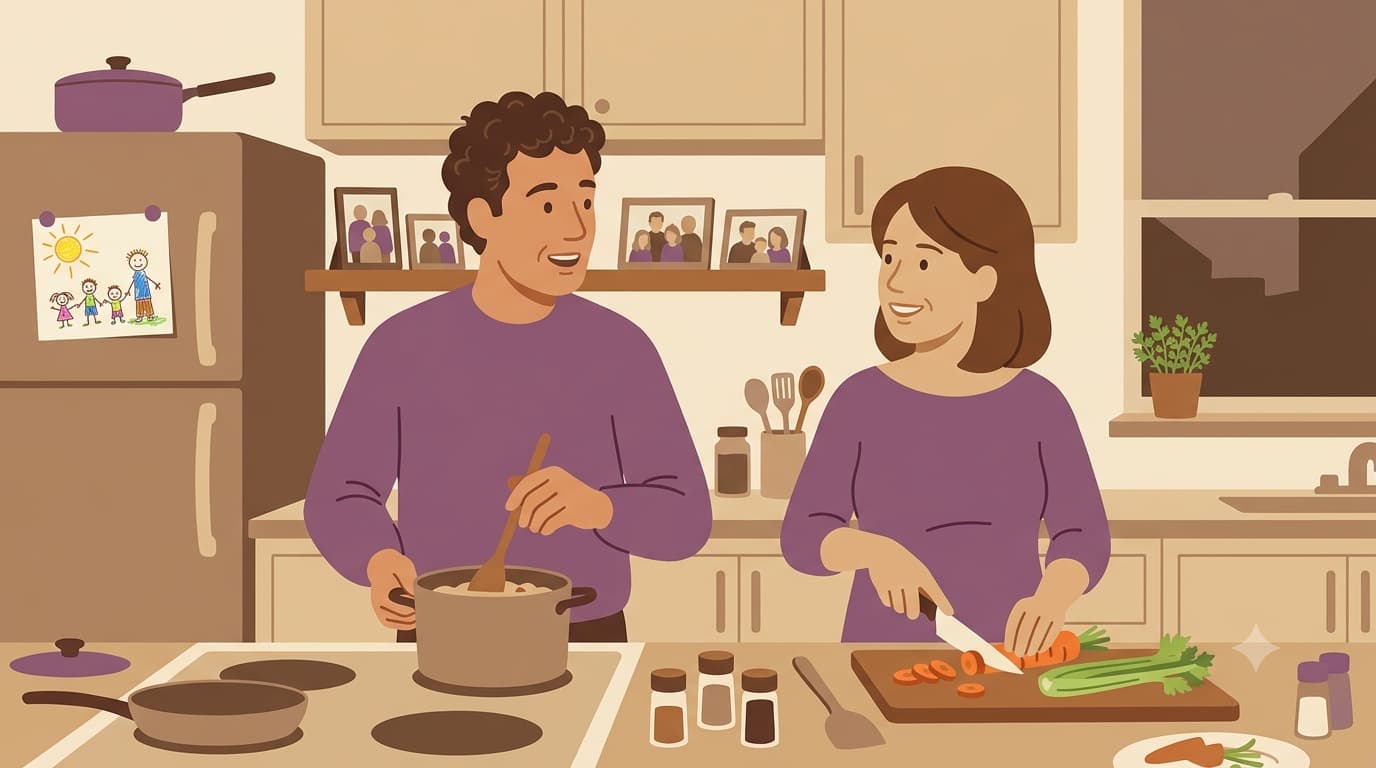
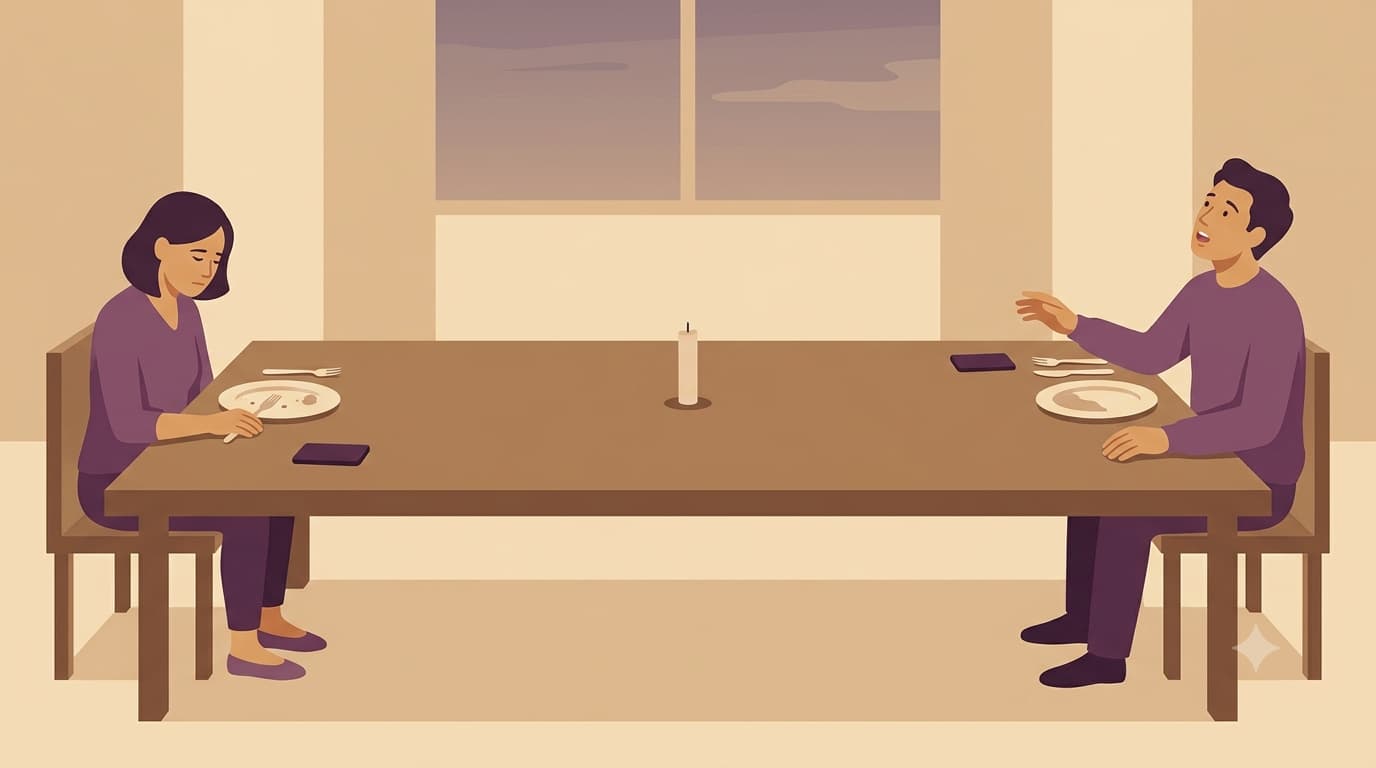
The couples who do this well protect small, reliable connection points. Not grand gestures or weekend getaways, just consistent, small rituals that say "we're still here." Dinner together three nights a week, no phones. A ten-minute check-in before bed. A weekend morning that belongs to the relationship, not the transition.
These rituals matter because career change has a tendency to colonize all available mental space. If you don't fence off time for the relationship, the relationship gets whatever scraps are left. And scraps aren't enough when both people are already feeling stretched.
The transitioning partner also needs to actively bring their partner into the process. Not for approval, but for inclusion. Share what you're excited about. Share what's scaring you. Let them see the messy middle, not just the polished version. When your partner feels like a witness to your transformation rather than a spectator watching from the parking lot, they're more likely to stay engaged.
What if your partner doesn't support the change?
This is the scenario everyone dreads, and it's more common than people admit. Your partner thinks the career change is irresponsible, poorly timed, or just wrong. They're not being difficult. They genuinely disagree.
First, separate disagreement from lack of love. Your partner can love you completely and still think this particular plan is a bad idea. Those two things can coexist. If you interpret their resistance as a betrayal, you'll escalate into a conflict that has nothing to do with the career itself.
Second, listen to the concern underneath the objection. "This is irresponsible" might mean "I'm terrified we'll lose our house." "The timing is wrong" might mean "I need you present for what I'm going through right now." The surface objection is rarely the whole story.
Third, find out what would make the change acceptable. Sometimes the gap between "I don't support this" and "I can live with this" is smaller than it appears. It might be a longer savings runway. A part-time transition instead of a cold-turkey quit. A specific commitment to revisit the decision at a set date.
If none of that works and you're at a genuine impasse, you're facing a values conflict, not a logistics problem. This is where couples therapy can help untangle what's actually at stake for each person.
The long view
Career changes end. The transition period, however awful, is temporary. What's not temporary is how you treated each other during it. Couples who come through career transitions stronger aren't the ones who had no conflict. They're the ones who kept talking honestly, kept showing up imperfectly, and kept choosing the relationship alongside the change, not instead of it.
Aperi's daily questions give couples a low-pressure way to keep that honest exchange going, even when one partner is deep in a transition and there's not much bandwidth left. A single meaningful question a day takes five minutes. It's not couples therapy. It's just a way to make sure you don't lose the thread.
Frequently asked questions
How do I support my partner's career change without losing myself?
Set boundaries around your own needs. You can be supportive without being a full-time therapist, financial advisor, and cheerleader. It's okay to say "I believe in you and I also need us to talk about something that's bothering me that has nothing to do with your career." Your life doesn't pause because theirs is in transition. Maintaining your own friendships, hobbies, and goals during your partner's career change isn't selfish. It's what keeps you from building resentment.
Should we wait until we have more savings before making the switch?
There's no universal number that makes a career change "safe." What matters is that both partners agree on the financial boundaries and the timeline for reassessment. Some couples need a year of living expenses saved. Others are comfortable with less if the transition plan is solid. The danger isn't making the change with imperfect finances. It's making it without discussing finances at all.
What if the career change takes longer than expected?
This is the norm, not the exception. Ibarra's research shows that career transitions almost always take longer than people expect. Build that expectation into your planning from the start. Agree on checkpoints rather than deadlines. "Let's look at where we are in six months" is more productive than "you said you'd be earning by March." When the timeline stretches, have the conversation again rather than letting frustration build silently.
Is it normal to feel jealous of my partner's new career excitement?
Completely. Watching your partner light up about something new while you're grinding through the same job you've had for years can trigger real envy. That doesn't make you a bad partner. It makes you a person with your own unfulfilled ambitions. Name it honestly, to yourself and to your partner. Sometimes the career change conversation opens up a parallel conversation: what do you want to change in your own life?
Aperi: one question a day
A daily question app that adapts to you and your partner, and goes deeper the more you use it.


Free to start. Available on iPhone and Android.
Explore question packs
Related articles
Communication in marriage: how the years change the conversation
Communication in marriage erodes through efficiency, not conflict. What the years change, which patterns predict real trouble, and what daily practice looks like.
Lack of communication in a relationship is rarely a skills problem
Lack of communication in a relationship: what the breakdown looks like in practice, what causes it (rarely skills), and the scripts that rebuild it.

50 couples therapy questions, in the order a therapist would ask them
50 couples therapy questions sequenced like a real session: history, patterns, needs, repair, future. Plus an honest look at when a list is not enough.

When you and your partner speak different love languages
You show love your way, not theirs. How to close the gap when you and your partner express affection differently, beyond the quiz.

Working with your partner: boundaries that save your relationship
When your partner is also your colleague, role confusion and power dynamics can erode the relationship. How to set boundaries that protect both.

When your partner travels for work
Work travel creates an asymmetry that regular long-distance advice ignores. What actually helps couples stay connected when one partner is always away.