Key Takeaways
Fun is relationship maintenance, not a luxury. Couples who do novel activities together stay happier than those who just do pleasant ones. You need play, not more date nights.
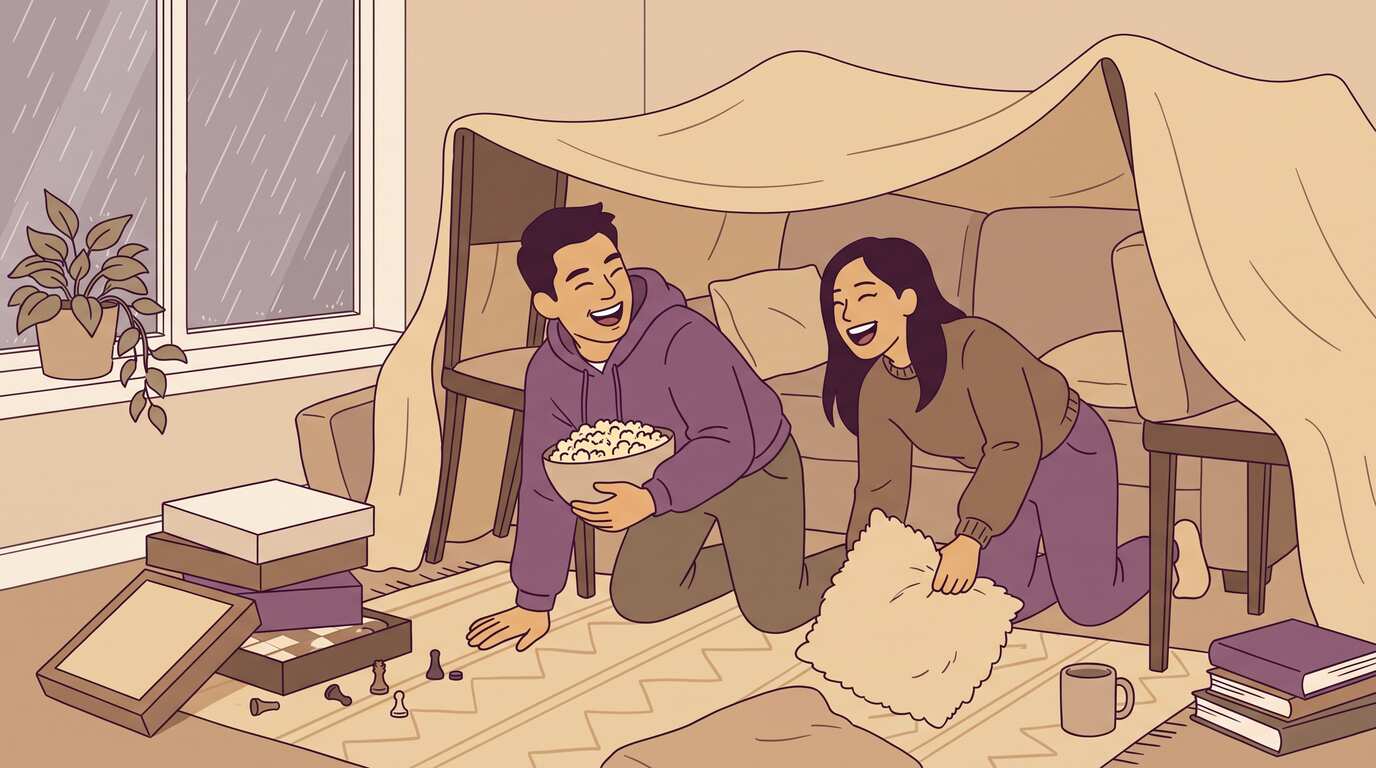
At the start of your relationship, fun wasn't something you scheduled. It happened. You wandered through a city with no plan. You spent a rainy afternoon building a blanket fort because why not. You tried a terrible recipe together and laughed until it hurt.
Now your idea of spontaneous fun is choosing a different restaurant for date night.
Something changed, and it wasn't that you stopped liking each other. It's that the infrastructure of your shared life expanded until it squeezed out everything that wasn't functional. Play got replaced by planning. Silliness got replaced by scheduling. And the relationship got more stable but less alive.
This isn't a small problem. The research says it's actually one of the biggest threats to long-term satisfaction.
Why does fun disappear from relationships?
Hedonic adaptation. Your brain adjusts to recurring pleasures and stops registering them. That weekend hike that felt like an adventure in year one becomes "the thing we do on Saturdays" by year four. The neuroscience is clear: dopamine responds to novelty and surprise, not to repetition. What was exciting becomes routine, and routine doesn't produce the neurochemical reward that bonds you together.
Arthur Aron and his colleagues at Stony Brook University studied this directly. In a 2000 study published in the Journal of Personality and Social Psychology, they found that couples who did novel and exciting activities together reported significantly higher relationship satisfaction than couples who did merely pleasant activities. Not dangerous activities. Not expensive activities. Just new ones.
The distinction matters. Pleasant activities (a nice dinner, watching your favorite show) are fine. They're comfortable. But they don't generate the shared arousal that makes your brain associate your partner with excitement and growth. Novel activities do. Trying something neither of you has done before, going somewhere unfamiliar, even just breaking your own patterns in small ways.
The problem is that long-term relationships are engines of pattern creation. You find what works and you repeat it. Efficiency is the enemy of novelty.
Is "date night" actually working?
An unpopular opinion: most date nights are boring. They follow the same script. Dinner at a restaurant, maybe a movie. The conversation covers logistics you didn't finish during the week. You're going through the motions of "quality time" without actually experiencing anything new together.
A 2016 study by researchers at the National Marriage Project found that while regular date nights do correlate with higher satisfaction, the effect is largely driven by the quality and novelty of the activity, not by the mere act of going out. Couples who described their date nights as "same as usual" showed almost no satisfaction boost compared to couples who didn't go out at all.
Date night becomes another chore when it's just another item on the calendar. When the planning feels like work. When you're checking a box rather than actually playing together.
The fix isn't to stop having date nights. It's to stop defaulting to the same ones. If you want ideas for breaking the pattern, our date night conversation guide can help with the talking part, and our better date night planning piece covers the logistics.
What happens when all your conversations become coordination?
This is what I call the logistics trap, and it's directly connected to the death of fun. When you're co-managing a household, careers, maybe kids, the cognitive load is enormous. Every conversation becomes a coordination meeting. "Did you call the plumber?" "What time is soccer?" "We need to talk about the budget."

There's nothing wrong with these conversations. They're necessary. But when they're the only kind of conversation you have, something breaks. You stop seeing your partner as a person and start seeing them as a co-manager. The relationship starts to feel like a small business with benefits.
Gottman's research at the University of Washington shows that couples who become roommates didn't get there through conflict. They got there through the slow erosion of what he calls "bids for connection." One partner makes a small bid ("look at that weird bird outside"), the other partner turns away (keeps scrolling, grunts, ignores it), and over time the bids stop coming. If this pattern sounds familiar, we wrote a whole piece on breaking out of the roommate rut.
Play is a bid for connection. Silliness is a bid. Suggesting something weird and spontaneous is a bid. When you're in full logistics mode, those bids feel frivolous. They're not.
Why do adults stop playing?
Stuart Brown, a psychiatrist who founded the National Institute for Play and wrote Play: How It Shapes the Brain, Opens the Imagination, and Invigorates the Soul, argues that play is a biological necessity for adults, not just children. His research across thousands of case studies found that play deprivation in adults correlates with depression, rigidity, and lack of purpose.
But adults don't play because play feels unproductive. We've internalized the idea that our time should be spent doing things that accomplish something. Rest is acceptable because it restores energy for more productivity. Play, though? Play exists for its own sake. That makes it feel like a waste.
In relationships, this shows up as the belief that fun is a luxury you earn after everything else gets done. Except everything else never gets done. There's always another errand, another obligation, another problem to solve. Fun gets perpetually deferred.
Brown's definition of play is useful here: an activity that is voluntary, apparently purposeless, and produces a feeling of freedom from time. When was the last time you and your partner did something that met those criteria?
Does laughing together actually matter that way?
Yes. More than you'd think.
Laura Kurtz and Sara Algoe at the University of North Carolina published a study in 2015 in Personal Relationships examining laughter in couples. They found that shared laughter (both partners laughing together at the same moment) predicted relationship quality, closeness, and social support. Unilateral laughter (one person laughing while the other doesn't) showed no such effect.
The key word is "shared." It's about finding the same things funny, not about being funny yourself. Shared laughter is a signal of alignment. It says: we see the world similarly. We get each other. We're on the same team.
This is why inside jokes are so powerful. They're compressed packets of shared experience. When you reference that dumb thing that happened three years ago and both crack up, you're reinforcing the idea that your relationship has a unique history and a private language.
Couples who've lost their fun have often lost their inside jokes too. Not because they forgot them, but because the context for generating new ones disappeared. You generate inside jokes through shared experiences, particularly novel or slightly absurd ones. No new experiences, no new jokes.
What does rediscovering play look like?
The good news: play doesn't require planning, money, or free weekends. Some of the most effective approaches are small and stupid:
Break a pattern today. Walk a different route. Cook something neither of you has tried. Rearrange the furniture together. The bar for novelty is lower than you think.
Compete at something trivial. Board games, card games, mini golf, who can throw a grape the farthest. Low-stakes competition creates shared arousal without any of the risks of actual conflict.
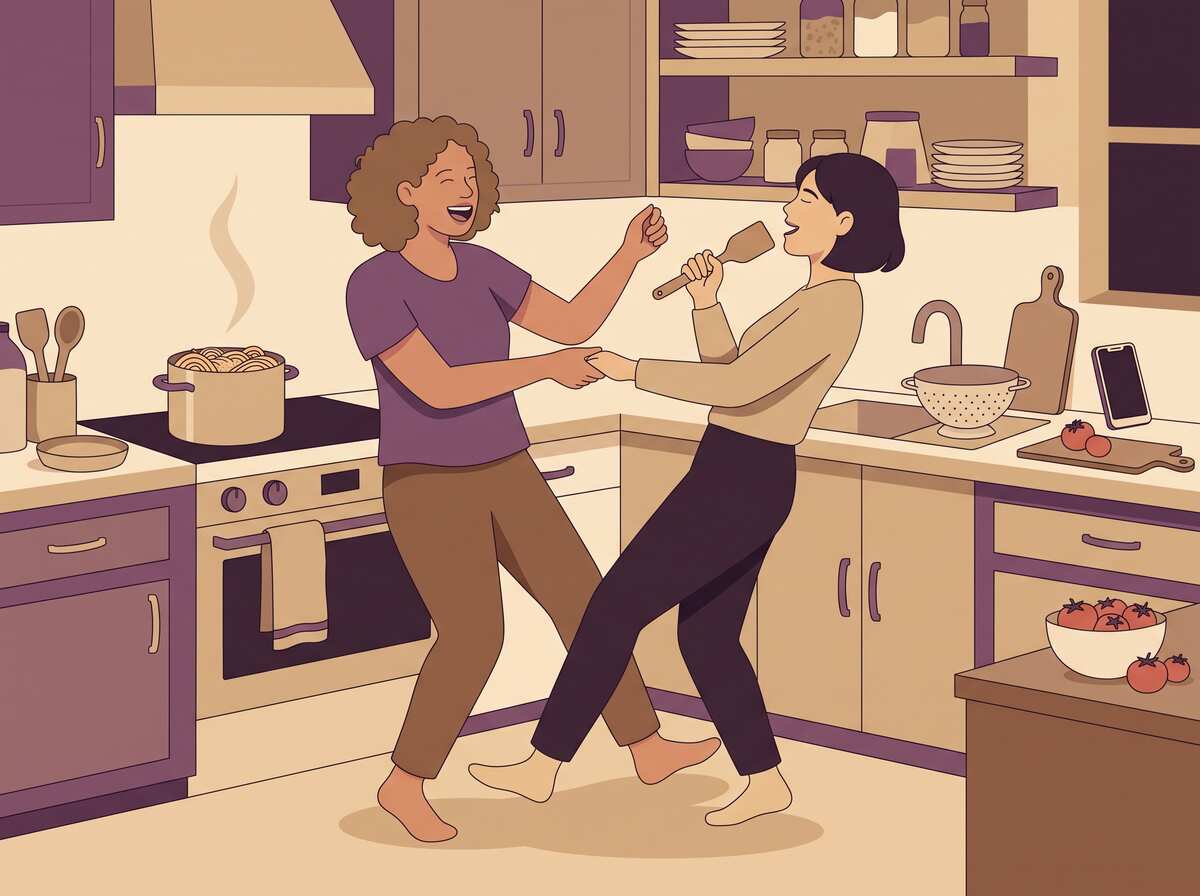
Be physically playful. Pillow fights, wrestling, tickling (if your partner is into it), dancing badly in the kitchen. Physical play releases oxytocin and triggers laughter. It also breaks the touch patterns of your relationship, which tend to narrow over time into a few predictable types.
Say yes to the weird idea. When your partner suggests something slightly odd ("let's go to that random antique store," "let's try to build something out of cardboard"), the default long-term-relationship response is to evaluate it for efficiency. Is it worth the time? Will it be good? Stop evaluating. Just go.
Learn something together. Take a class. Watch a tutorial and try it. The shared experience of being bad at something together is one of the fastest ways to regenerate the playful dynamic you had early on.
Put your phones away. Boredom is the precursor to play. If you fill every idle moment with your phone, you never reach the state of "well, what should we do?" that generates spontaneous fun. For more on this, see our guide to keeping curiosity alive long-term.
What if only one of us wants to play?
This is common, and it's worth addressing directly. One partner suggests something fun. The other says they're tired, it's not practical, they'd rather just relax. The suggesting partner stops suggesting. The fun dies.
If you're the one declining, consider that your partner isn't just asking you to do an activity. They're making a bid for connection. Turning it down consistently sends a message: I don't want that kind of relationship with you right now. That may not be what you mean, but it's what lands.
If you're the one suggesting and getting rejected, try lowering the bar. Don't suggest a weekend trip. Suggest a 10-minute walk. Don't suggest a cooking class. Suggest cooking something weird for dinner tonight. Make the ask so small that "no" feels harder than "yes."
The goal isn't to fill your calendar with adventures. It's to shift the ratio. Right now, most of your shared time is probably functional. If you can move even 15% of it toward play, you'll feel the difference.
How does fun connect to long-term relationship health?
Aron's self-expansion theory says that we're drawn to relationships that help us grow, learn, and experience new things. In the early stages, a new partner is a massive source of self-expansion. Everything about them is new. Every conversation is a discovery.
As the relationship matures, self-expansion slows unless you actively create new shared experiences. When it stops entirely, the relationship feels stagnant. You don't necessarily want to leave, but you feel stuck. You miss the feeling of growing together.
Fun is self-expansion in its most accessible form. Every new experience you share, no matter how small, adds to your collective story. It gives you something to talk about that isn't logistics. It reminds you that your partner is a person, not just a co-pilot.
The couples who last aren't the ones who never get bored. They're the ones who notice the boredom and do something about it.
Frequently asked questions
We're exhausted all the time. How do we have fun when we barely have energy for basics?
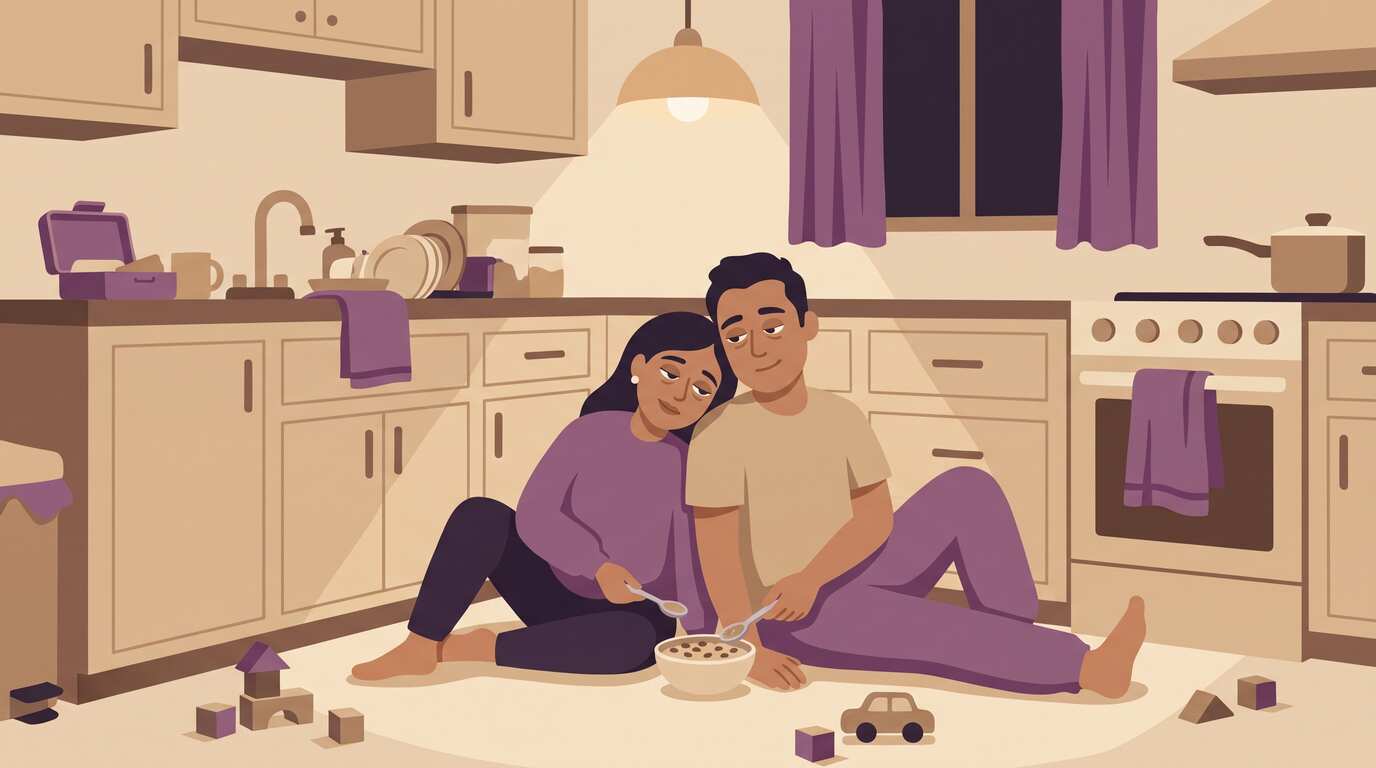
Fun doesn't have to be high-energy. Sitting on the floor eating ice cream out of the carton while telling embarrassing stories is play. Watching a terrible movie and making fun of it together is play. The point is shared experience that isn't task-oriented. You can do that from your couch in your pajamas.
My partner thinks "fun" means going out and doing expensive things. I disagree. How do we bridge that?
Talk about what fun actually felt like in the early days. Usually it wasn't expensive. It was spontaneous, unplanned, slightly weird. The feeling you're both chasing isn't about the activity, it's about the dynamic between you during the activity. You can recreate that dynamic with a deck of cards and a bag of chips.
We've been in a rut for years. Is it too late?
No. The research is consistent on this: introducing novel shared experiences produces measurable increases in satisfaction regardless of how long the rut has lasted. The first attempt might feel awkward. That's normal. Awkwardness is just what novelty feels like when you're out of practice.
Doesn't this put pressure on every shared moment to be "fun"?
It shouldn't. The goal isn't constant entertainment. It's shifting the balance so that some portion of your time together involves play, novelty, or silliness. Most of your time will still be ordinary. That's fine. You just need enough play to keep the relationship from calcifying.
Aperi: one question a day
A daily question app that adapts to you and your partner, and goes deeper the more you use it.


Free to start. Available on iPhone and Android.
Explore question packs
Related articles
Rituals of connection: the small acts that hold relationships together
Relationship rituals are more than habits. They are how couples create identity, predictability, and meaning. How to build ones that last.
Being alone together without feeling lonely
Parallel presence is a sign of security, not disconnection. How to share space without sharing every activity.
Feeling close when you're both exhausted
Exhausted couples don't need date nights. They need 5-minute micro-connection strategies backed by Gottman's 'small things often' research.
Evening rituals for couples: how to end the day connected
Eight evening rituals backed by research to help couples transition from work mode to connection. Specific how-tos included.
Creating a shared calendar that works for your relationship
A shared calendar isn't just logistics. It's the difference between 'I told you about that' and actually being on the same page.
Social media rules for couples
Social media creates real relationship problems. Research-backed rules for handling posts, exes, and phone time together.