Key Takeaways
Rituals are habits with intention. Daily, weekly, and annual rituals of connection predict relationship satisfaction more reliably than big romantic gestures. Here is how to build and maintain them.
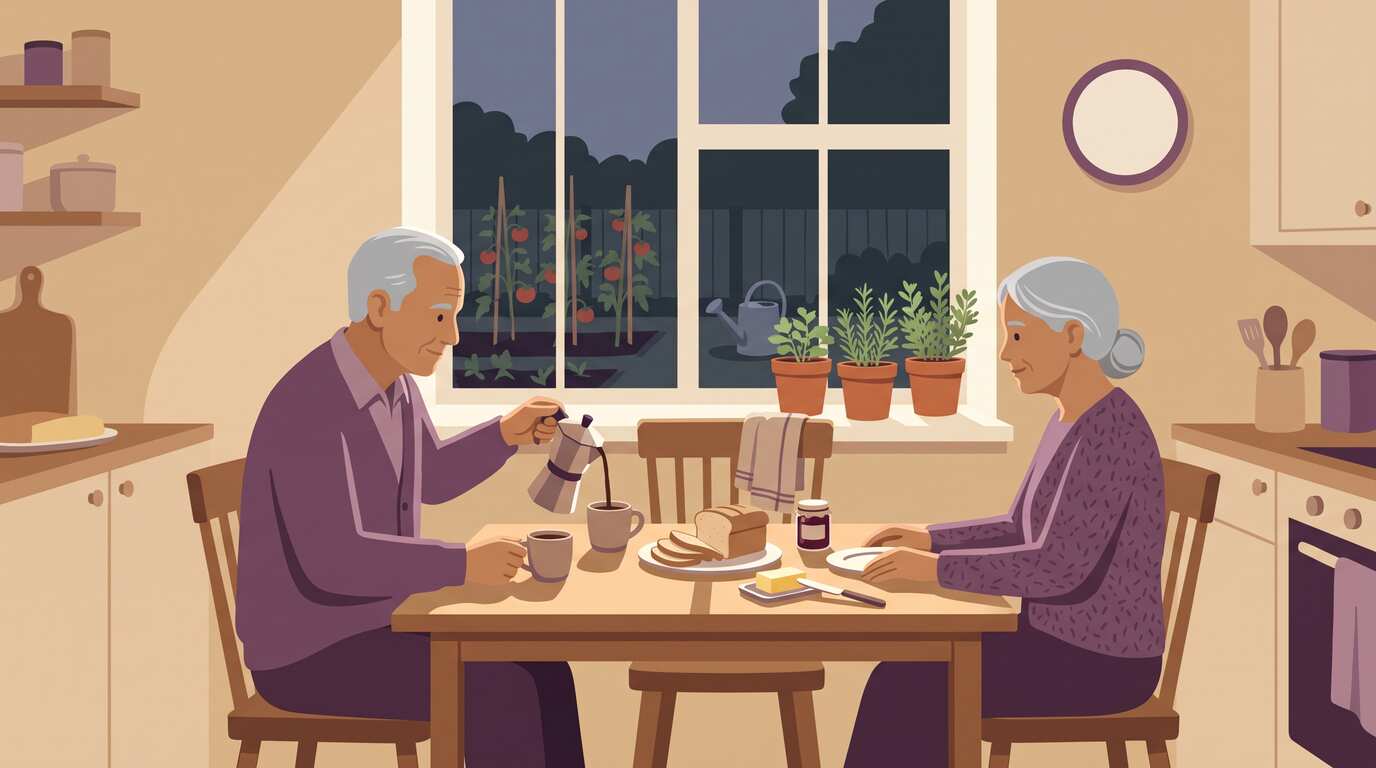
Every morning, my grandparents had the same routine. My grandfather made coffee. My grandmother set the table. They sat together for exactly twenty minutes before anyone else in the house woke up. They didn't discuss anything profound. Mostly weather, the garden, what needed doing that day. But that twenty minutes was non-negotiable. It happened every single morning for forty-seven years.
When my grandmother was asked what kept their marriage together, she didn't mention love, patience, or communication. She said, "We never missed our morning coffee."
That's a ritual of connection. And the research says she was right about its power.
What makes a ritual different from a routine?
This distinction matters, and most people get it wrong. A routine is functional. A ritual is meaningful. The activity can be identical; what differs is the intention behind it and the significance assigned to it.
Evan Imber-Black and Janine Roberts explored this in their foundational work Rituals in Families and Family Therapy. They defined rituals as repeated symbolic acts that contain open and closed parts. The "closed" part is the structure, what you do and when. The "open" part is the meaning, what it represents and how it makes you feel. A routine has structure but no meaning. A ritual has both.
Brushing your teeth before bed is a routine. Sitting together in bed for five minutes talking about your day before turning off the light is a ritual. Going grocery shopping is a routine. Going to the farmers market together every Saturday morning and getting the same pastry from the same stall is a ritual.
The transformation from routine to ritual happens when both partners recognize the practice as meaningful and would notice its absence. If your partner skipped brushing their teeth, you wouldn't feel disconnected. If they skipped the bedtime conversation three nights in a row, you would.
Why do humans need rituals at all?
Rituals predate recorded history. Every culture, every society, every family has them. Anthropologist Victor Turner spent his career studying why, and his conclusion was that rituals serve three functions: they create predictability in an unpredictable world, they mark transitions between states (single to married, child to adult, stranger to community member), and they reinforce identity.
All three of these functions apply directly to relationships.
Predictability. Relationships thrive on security. Attachment theory tells us that the sense of a reliable, available partner is the foundation of a healthy bond. Rituals create predictability at a micro level. When you know that every evening includes a specific moment of connection, you spend less energy worrying about the state of the relationship and more energy actually living in it.
Transition. Many relationship rituals mark the shift between roles. The kiss at the door when you come home marks the transition from worker to partner. The Sunday planning session marks the transition from weekend to weekday. These transitions matter because modern life forces us through multiple role changes daily, and without markers, the shifts happen sloppily or not at all.
Identity. "We're the couple that always..." is a statement of shared identity. It says: this is who we are, this is what we do, this belongs to us. Shared identity is the bedrock of what Gottman calls "shared meaning," which sits at the top of his model of relationship health. Our piece on building shared meaning goes into this in detail.
What does the research say about rituals and satisfaction?
Barbara Fiese and her colleagues published a significant review in 2002 in the Journal of Family Psychology examining ritual research across dozens of studies. Their findings were consistent: families and couples with more developed ritual systems reported higher satisfaction, stronger sense of identity, and greater resilience during stressful periods.
The effect was dose-dependent. It wasn't just "have some rituals" vs. "have no rituals." Couples with more rituals, and rituals that carried more meaning, showed higher satisfaction. The rituals also buffered against external stress. When life got hard (job loss, illness, a move), couples with strong ritual systems maintained their satisfaction levels better than couples without them.
Fiese distinguished between rituals that were "practiced" (done out of obligation) and rituals that were "invested in" (done with genuine meaning and engagement). Only the invested-in rituals predicted positive outcomes. Going through the motions didn't help. This is important and we'll come back to it.
What do relationship rituals actually look like?
They exist at every time scale. Here are examples at each level, drawn from both research and clinical practice.

Daily rituals
These are the backbone. Small, brief, and easy to overlook, but they create the daily infrastructure of connection.
The departure and reunion. How you say goodbye in the morning and hello in the evening. Gottman's research found that couples who had a meaningful goodbye (a real kiss, a genuine "have a good day," knowing at least one thing on their partner's agenda) and a stress-reducing reunion conversation at the end of the day showed significantly higher satisfaction. The six-second kiss at departure is one of his most specific recommendations. We wrote about this in our six-second kiss piece.
The check-in. One genuine question, asked and answered, every day. Not "how was your day?" (too broad, invites "fine"). Something specific. "What was the best part of today?" "What's weighing on you?" "Did anything surprise you?" The consistency matters more than the question. Daily check-ins are a commitment to staying current with each other's inner lives.
The bedtime ritual. How you end the day together. Going to bed at the same time. Talking for five minutes with the lights off. Reading next to each other. Physical contact. Whatever it is, the ritual marks the transition from the day's demands to the relationship's space.
For a more complete list of evening rituals backed by research, see our evening rituals guide.
Weekly rituals
These create rhythm and give you something to anticipate.
The dedicated conversation. One evening per week where you talk about the relationship itself, not logistics or kids. How are we doing? What do we need? What's been good? What's been hard? Our weekly check-in guide has a specific format for this.
The shared activity. Something you do together every week that isn't functional. A walk. A TV show you watch together. Cooking a specific meal. Playing a game. The content doesn't matter. The recurrence does. It's the weekly reminder that your relationship includes play, not just management.
The planning session. Less romantic but equally important. A weekly coordination meeting where you sync calendars, divide tasks, and discuss upcoming decisions. Doing this deliberately, at a set time, prevents logistics from leaking into every other conversation.
Annual rituals
These are the markers of your shared history.
Anniversary traditions. Not just "go to dinner." Something specific and unique to you. Revisiting the place you met. Writing each other letters. Recreating your first date. The specificity is what makes it a ritual rather than a generic celebration.
Holiday rituals. How you celebrate holidays as a couple, which may differ from how your families of origin celebrated. Establishing your own traditions is an important part of building a shared identity.
The annual review. Sitting down once a year to talk about your relationship at a macro level. What worked this year? What didn't? What do we want next year to look like? This is high-level shared meaning creation. See our annual review guide for structure.
How do you create a new ritual?
Creating rituals isn't as simple as deciding to do something regularly. Plenty of couples have tried to institute "date night every Thursday" and abandoned it within a month. Here's what makes the difference.
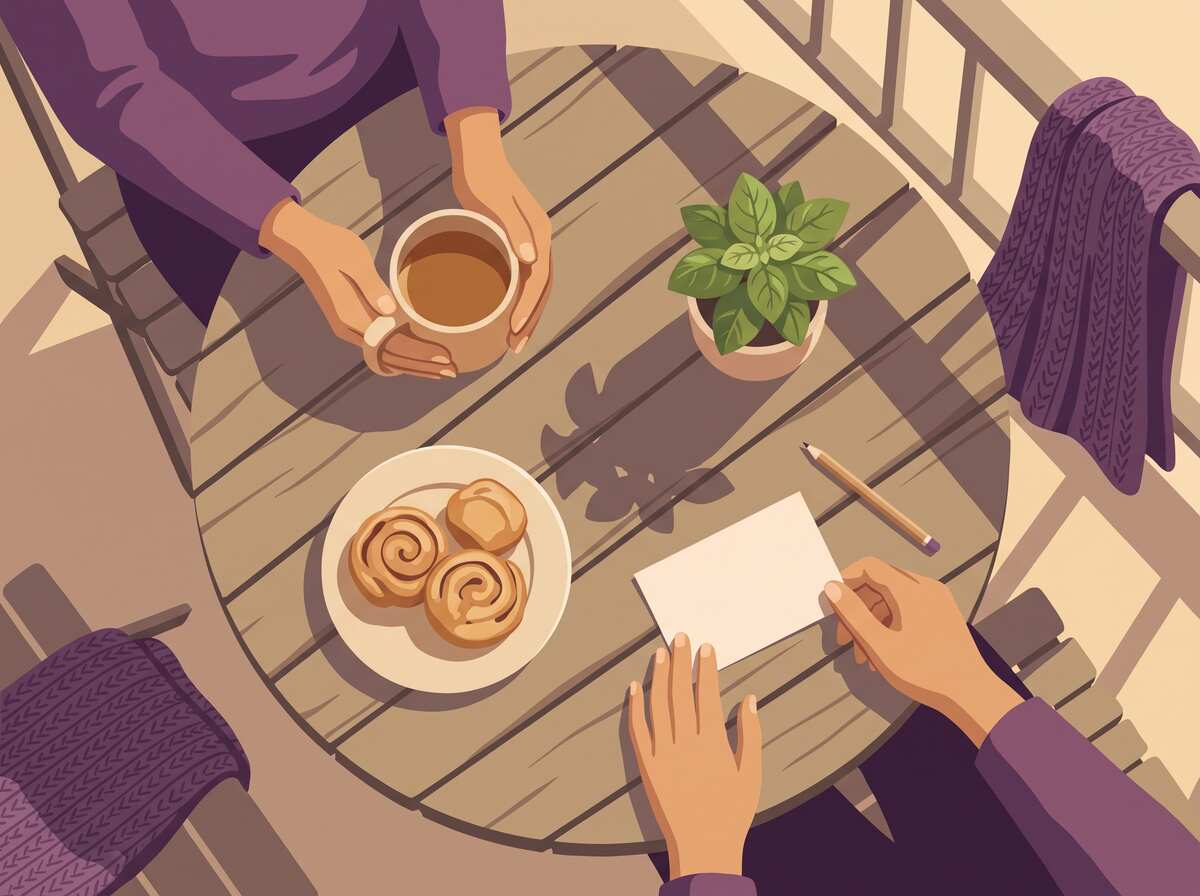
Start smaller than you think. A two-minute daily ritual will stick. A two-hour weekly ritual probably won't, at least not at first. The most resilient rituals are the ones that require so little effort that skipping them feels harder than doing them. A question before bed. A kiss at the door. A text at lunch. Build the habit first, then expand if you want.
Make it yours. Generic rituals borrowed from articles (including this one) work as starting points but need personalization to stick. The ritual should reflect something about your specific relationship. Maybe your check-in question is weird and specific. Maybe your weekly activity is something nobody else would find fun. That's good. The more "you" it is, the more meaning it carries.
Be consistent, especially at the start. Rituals gain power through repetition. The first few times you do something, it's just an activity. After ten repetitions, it starts to feel like "your thing." After fifty, it's part of your identity. The consistency is what transforms an activity into a ritual.
Protect it. Rituals are easy to sacrifice when life gets busy. "We'll skip it this week" becomes "we haven't done that in months" faster than you'd expect. Treat your rituals with the same seriousness you'd treat a doctor's appointment. Not because they're obligations, but because they're investments.
Name it (if it fits). Some couples name their rituals. "Sunday Summit" for the weekly planning session. "The Debrief" for the evening check-in. Naming something gives it an identity that makes it easier to protect and harder to forget.
When do rituals become obligations that lose their meaning?
This is the dark side of rituals, and Fiese's research flagged it clearly. When a ritual becomes something you do because you're supposed to rather than because it means something, it stops working. It might even become counterproductive, another item on the to-do list, another source of guilt when you miss it.
Signs a ritual has lost its meaning:
You do it mechanically, without presence. The bedtime check-in becomes a scripted exchange where neither person is actually listening. The weekly date night becomes dinner where you're both on your phones.
One partner feels obligated but the other doesn't notice. The asymmetry is a problem. If one person is going through the motions to avoid conflict while the other genuinely values the ritual, the resentment builds.
It no longer reflects your current life. The ritual that worked when you were newlyweds might not work when you have two kids and demanding careers. Rituals need to evolve as the relationship evolves.
You can't remember why you started it. If the original meaning has been forgotten and nothing new has replaced it, the ritual is just a routine wearing ritual clothing.
How do you retire a ritual that no longer serves you?
This requires honesty and a willingness to let go of things that used to matter. Not everything needs to last forever.
The conversation looks like this: "I've noticed that [ritual] doesn't feel the same as it used to. I think we've outgrown it. Can we talk about what we need instead?"
The "instead" part is important. Don't just drop a ritual without replacing it. The underlying need (connection, meaning, transition) still exists. The ritual was just the vehicle. Find a new vehicle that fits your current life.
Some couples find it helpful to do this as part of an annual review. Looking at the year's rituals and asking: which of these are alive and meaningful? Which have become hollow? What new ones should we try?
Letting go of a ritual isn't failure. It's maintenance. Relationships change. The practices that sustain them should change too.
What if my partner resists rituals?
Some people are ritual-averse. They associate rituals with obligation, religion, or formality. They value spontaneity and resist anything that feels scheduled or prescribed.
If this is your partner, don't try to sell them on "rituals." Just start doing small, enjoyable things consistently. Make them coffee every morning. Ask them one specific question every evening. Suggest a walk at the same time each week. Don't label it. Don't announce it as a new relationship initiative. Just do it.
Over time, the practice becomes familiar. Your partner starts to expect it, even look forward to it. At that point, it's a ritual whether they call it one or not. The label doesn't matter. The consistency and meaning do.
Frequently asked questions
How many rituals does a couple need?
There's no magic number. Fiese's research suggests that more is generally better, but only if they're genuine. Three meaningful rituals beat ten hollow ones. Most couples benefit from at least one daily ritual (check-in, departure/reunion), one weekly ritual (shared activity or conversation), and one annual ritual (anniversary, review).
What if we can't find time for rituals?
The rituals that matter most take almost no time. A six-second kiss is six seconds. A single check-in question takes two minutes. Going to bed at the same time costs zero minutes. If you genuinely can't find two minutes a day, the problem isn't time, it's priority.
Can rituals feel forced at first?
Yes, and that's normal. Anything new feels self-conscious before it becomes natural. Give a new ritual at least three weeks before evaluating whether it works. The initial awkwardness isn't a signal that the ritual is wrong. It's a signal that it's new.
Do rituals have to involve both partners equally?
Ideally, yes. A ritual maintained by only one person is a gift, not a shared practice. Both partners should be invested in the ritual's existence and would notice if it stopped. If one person is carrying all the ritual maintenance, that's worth a conversation.
What's the most impactful ritual for couples who feel disconnected?
The daily check-in. One real question, asked with genuine curiosity, answered with genuine honesty, every single day. It's the smallest possible intervention with the largest possible return. Start there and build outward.
Aperi: one question a day
A daily question app that adapts to you and your partner, and goes deeper the more you use it.


Free to start. Available on iPhone and Android.
Explore question packs
Related articles

Being alone together without feeling lonely
Parallel presence is a sign of security, not disconnection. How to share space without sharing every activity.
Why couples stop having fun together
Fun in relationships fades because of logistics and hedonic adaptation. Here is why play matters and how to bring it back.
Feeling close when you're both exhausted
Exhausted couples don't need date nights. They need 5-minute micro-connection strategies backed by Gottman's 'small things often' research.

Evening rituals for couples: how to end the day connected
Eight evening rituals backed by research to help couples transition from work mode to connection. Specific how-tos included.
Creating a shared calendar that works for your relationship
A shared calendar isn't just logistics. It's the difference between 'I told you about that' and actually being on the same page.
Social media rules for couples
Social media creates real relationship problems. Research-backed rules for handling posts, exes, and phone time together.