Key Takeaways
Volatile couples (big fights, big passion) and conflict-avoiding couples (minimal arguments, smooth surface) can both be perfectly stable. Gottman's research shows the key variable isn't conflict frequency. It's the ratio of positive to negative interactions (5:1) and whether both partners share the same style. Style mismatches, not the styles themselves, predict the most trouble.
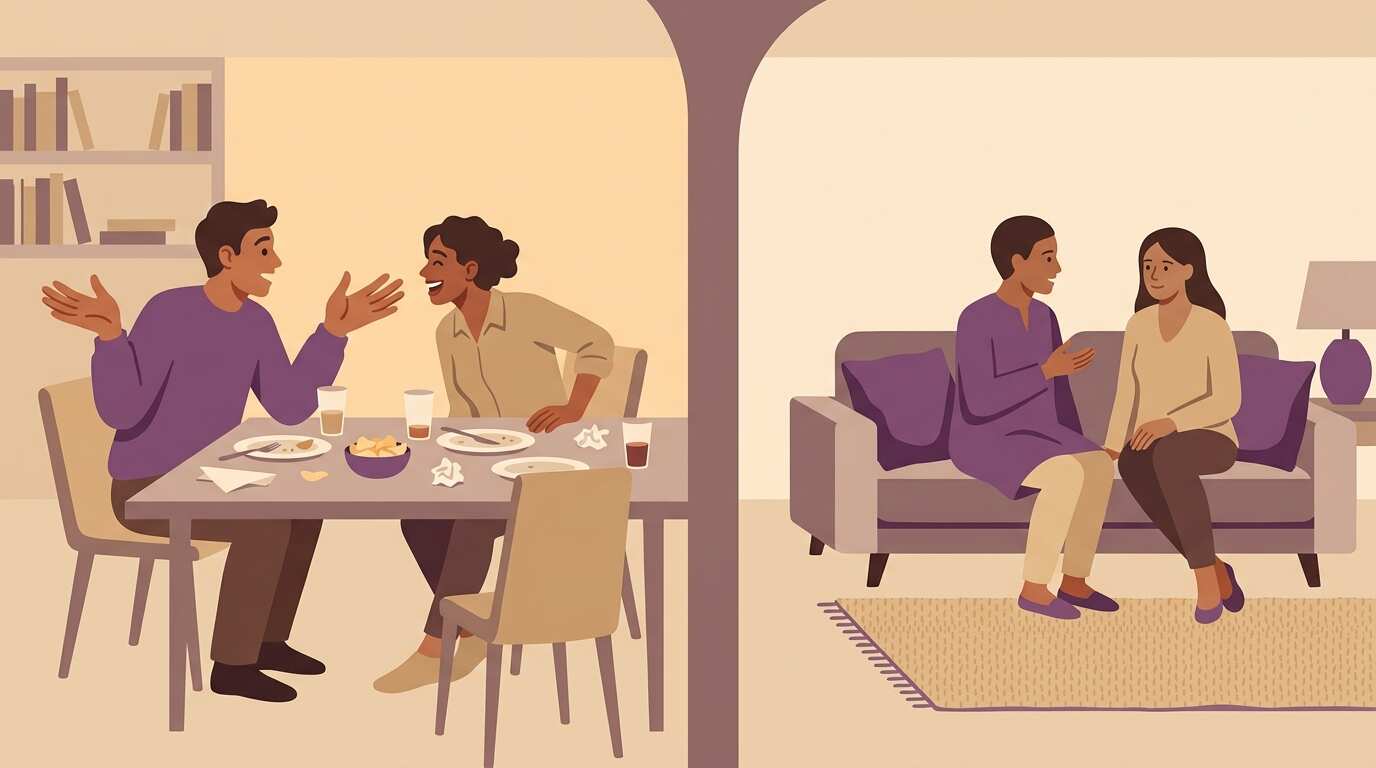
Some couples fight loudly, frequently, and with real heat. They argue about the dishes, about politics, about whether the GPS is taking the right route. Voices get raised. Points get made with emphasis. And then it passes, and they're laughing at dinner, genuinely affectionate, like nothing happened.
Other couples almost never fight. They sidestep disagreements, change the subject, agree to disagree, or just let things go. Their friends describe them as "chill" or "easygoing." There's very little visible friction.
Most relationship advice assumes the second couple is healthier than the first. That's wrong. Or at least, it's incomplete. John Gottman's research at the University of Washington, based on decades of observing couples in his "Love Lab," identified three distinct stable couple styles. All three can produce lasting, satisfying relationships. And all three can fail.
The question isn't whether you fight a lot or a little. It's whether your conflict style works for both of you, and whether the math checks out.
What are the three couple styles?
Gottman, working alongside his colleague Robert Levenson, categorized couples into three stable types based on how they handle disagreement.
Volatile couples. These are the high-conflict pairs. They engage with disagreements directly, sometimes heatedly. Arguments can be loud, emotional, and intense. But so is everything else. Volatile couples tend to be more passionate across the board: more expressive in affection, more demonstrative in love, more engaged in each other's lives. The fights are big, and the makeups are big. There's a lot of emotional energy in both directions.
Conflict-avoiding couples. The low-conflict pairs. They minimize disagreements, emphasize common ground, and don't push on differences. They'd rather let something go than fight about it. This isn't stonewalling. They're not shutting down out of contempt or overwhelm. They've implicitly agreed that most disagreements aren't worth the disruption, and they focus their energy on what they share rather than where they diverge.
Validating couples. The middle ground. They engage with conflict, but moderately. They listen to each other's perspectives, acknowledge feelings, seek compromise, and then move on. Their disagreements are calm, structured, and usually resolved through mutual concession. Most couples therapy models are built around this style because it looks the most "healthy" from the outside.
The part most people miss: Gottman's data showed that all three styles can be equally stable and satisfying. Volatile couples weren't more likely to divorce than validating ones. Conflict-avoiders weren't more likely to be unhappy than couples who faced every disagreement head-on. Each style had its own internal logic, its own strengths, and its own risks.
What makes each style stable?
The answer is the same for all three: the 5:1 ratio.
Gottman's most famous finding is that stable, happy couples maintain a ratio of at least five positive interactions for every one negative interaction during conflict. This doesn't mean five compliments for every criticism. It means five instances of warmth, humor, interest, affection, agreement, or connection for every instance of frustration, criticism, defensiveness, or hostility.
The ratio operates differently across the three styles.
Volatile couples have a lot of negative interactions. Heated arguments, sharp words, strong disagreements. But they also have a lot of positive interactions: passionate affection, humor during fights, genuine interest, enthusiastic makeup gestures. The ratio holds because both sides of the ledger are high. Think of it as a 25:5 ratio rather than a 5:1 ratio. The absolute numbers are bigger, but the proportion still works.
Conflict-avoiding couples have very few negative interactions. But they also tend to have fewer intensely positive ones: less demonstrative affection, less explicit verbal appreciation, fewer dramatic gestures. The ratio holds because both sides are low. Maybe it's 5:1 expressed as 10:2. Less total interaction, but the proportion is maintained.
Validating couples sit in between. Moderate conflict, moderate warmth. The ratio holds because both are moderate.
The couples who got into trouble in Gottman's research weren't the ones with "too much" or "too little" conflict. They were the ones where the ratio dropped below 5:1, where negativity outweighed positivity, regardless of style.
Which style is actually healthiest?
None of them is inherently better. I know that sounds like a cop-out, but the data is clear. What matters is whether the style is working for both people in the relationship.
That said, each style carries specific risks.
Volatile couples risk escalation. When both people are comfortable with intensity, arguments can spiral into territory that causes real damage. Contempt, personal attacks, bringing up past wounds: these happen more easily when the baseline emotional temperature is already high. If a volatile couple loses the ability to repair after fights (those small gestures of reconnection that signal "we're still okay"), the intensity that once felt exciting starts to feel destructive. The pursuer-withdrawer pattern can develop when one volatile partner burns out on the intensity and starts pulling away.
Conflict-avoiding couples risk stagnation. When you never address disagreements, problems don't go away. They go underground. Over years, unspoken resentments accumulate. The conflict-avoiding couple's surface calm can mask a growing distance between two people who've never been honest about what bothers them. One day, seemingly out of nowhere, one partner announces they're unhappy and the other is blindsided. It wasn't sudden. It was building for years under the smooth surface.
There's also a depth question. Some research suggests that conflict-avoiding couples may avoid not just conflict but emotional vulnerability in general. If you don't fight, you might also not be sharing fears, hurts, desires, and disappointments. The peace is real, but it might come at the cost of intimacy.
Validating couples risk over-compromise. When both partners are oriented toward fairness and agreement, they sometimes split every difference rather than actually solving the underlying problem. Chronic compromise can mean that neither person ever fully gets what they want. Over time, this produces its own kind of resentment: not the sharp resentment of unresolved fights, but the dull resentment of always settling.
What happens when partners have different conflict styles?
This is where the real trouble starts. Gottman's research found that the most unstable couple configuration isn't two volatile people or two avoiders. It's a mismatch. One partner who wants to engage with conflict paired with one who wants to avoid it.
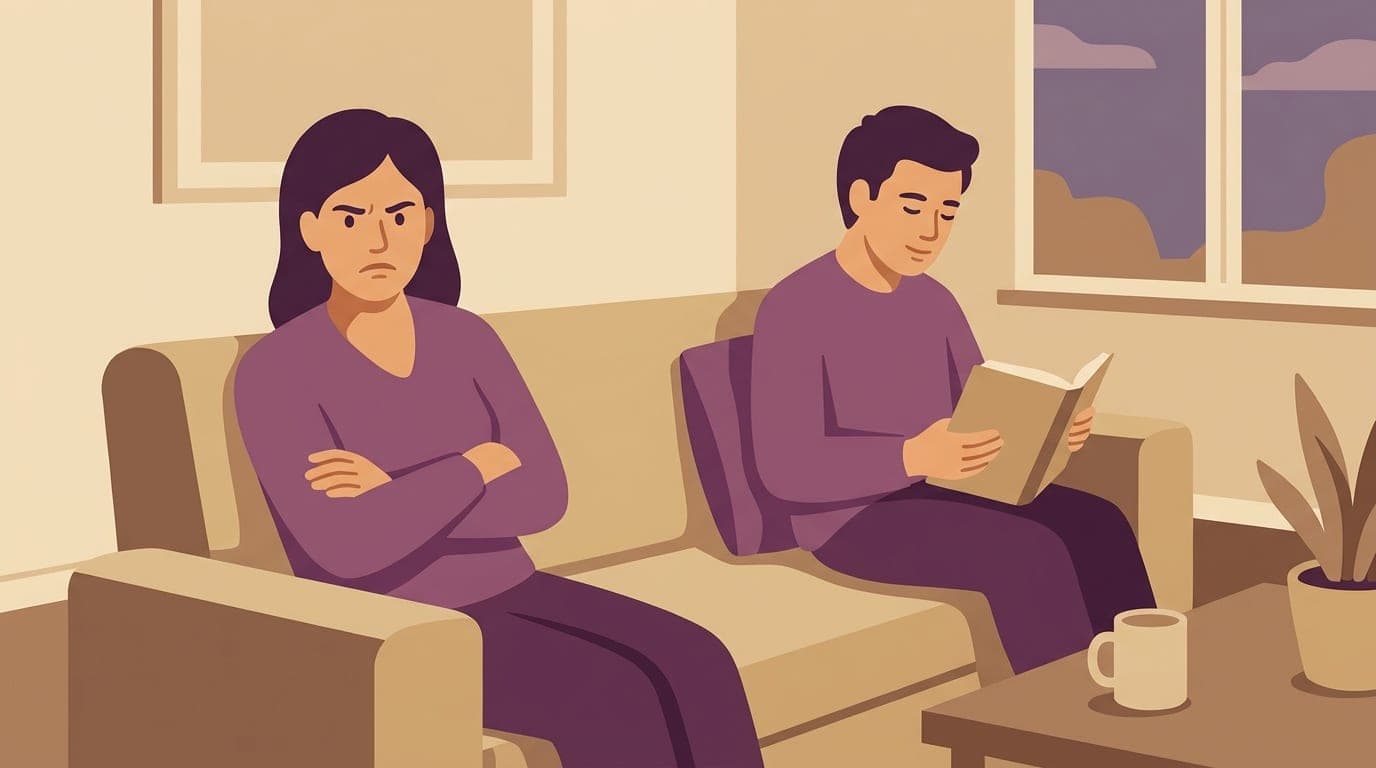
The pattern is predictable and exhausting. The engaging partner raises an issue. The avoiding partner deflects, minimizes, or changes the subject. The engaging partner feels unheard and pushes harder. The avoiding partner feels overwhelmed and withdraws further. The engaging partner interprets the withdrawal as indifference. The avoiding partner interprets the pushing as aggression. Both feel justified in their response. Neither feels understood.
This is a variant of the demand-withdraw cycle that's been studied extensively in relationship research. Christensen and Heavey's work at UCLA showed that demand-withdraw is one of the most destructive patterns in relationships, predicting declining satisfaction over time regardless of the specific topic being discussed.
If you recognize this pattern in your relationship, the pursuer-withdrawer guide goes into detail on how to interrupt it. The short version: both people need to move toward the middle. The engager needs to raise issues more gently, with less urgency. The avoider needs to tolerate more discomfort and stay in the conversation longer. Neither person needs to become the other. But both need to flex.
How do you figure out your own conflict style?
Pay attention to what happens when you disagree about something that actually matters. Not the small stuff, but the big recurring themes: money, parenting, sex, time, family, priorities.
You might be volatile if: your arguments get loud but don't last long. You say things in the heat of the moment that you wouldn't say when calm. Making up feels almost as intense as fighting. Your partner would describe you as passionate. Friends might describe your relationship as "fiery." Humor shows up even during conflict. You'd rather fight it out than let something fester.
You might be conflict-avoiding if: you almost never raise issues directly. You use humor or deflection to redirect tense moments. You genuinely believe most disagreements aren't worth fighting about. Your partner would describe you as easygoing. Friends might say you "never fight." When something bothers you, your first instinct is to let it go rather than bring it up.
You might be validating if: you raise issues but calmly. You listen to your partner's perspective and expect them to listen to yours. Compromise is your default resolution. Your partner would describe you as fair. Your fights are structured and usually end with a practical solution. You believe in talking things through, not shouting them out or sweeping them under the rug.
Most couples recognize themselves quickly. The harder question is whether your style is working. If both of you share a style and the 5:1 ratio holds, you're probably fine. If there's a mismatch, or if one of you is unhappy with how conflict plays out, that's information worth acting on.
What's the unstable version?
Gottman identified a fourth category that isn't a style so much as a state: the hostile-detached couple. This is what happens when a couple has given up on repair.
Hostile-detached couples still fight, but the fights have no warmth, no humor, and no resolution. There's criticism without curiosity. Contempt without affection. The ratio has dropped well below 5:1, sometimes 1:1 or worse. The couple is together, technically, but emotionally they've already separated.
The hostile-detached pattern can develop from any of the three stable styles. A volatile couple that loses the ability to repair becomes hostile. An avoiding couple that has buried so much resentment they've become detached. A validating couple that has compromised so often they've lost respect for each other.
The Gottman method describes this progression using the concept of the "four horsemen": criticism, contempt, defensiveness, and stonewalling. When these become the default rather than the exception, the couple has moved from a stable style into instability. That progression and its antidotes are covered in detail in the Gottman method explainer.
Can you change your conflict style?
Partially. Your baseline temperament (how emotionally reactive you are, how comfortable with intensity, how much stimulation you seek) is relatively stable. A naturally volatile person isn't going to become a conflict-avoider, and probably shouldn't try.
But you can learn skills that modify how your style expresses itself. A volatile person can learn to fight without contempt. A conflict-avoider can learn to bring up issues before they metastasize. A validator can learn to tolerate more intensity from a partner who needs to be heard.
The communication guide covers specific techniques that work across styles. Soft startups reduce the chance that a volatile discussion turns hostile. Active listening helps avoiders stay present during uncomfortable conversations. Repair attempts, those small gestures mid-conflict that signal connection, work for every style.
What you can't do is force your partner to adopt your style. If you're volatile and they're an avoider, the path forward isn't demanding that they "engage." It's understanding that their avoidance is a real response to a real feeling (overwhelm, fear of escalation), and figuring out together how to handle disagreements in a way that respects both people's nervous systems.
Aperi gives couples a daily question that opens up the kinds of conversations most people avoid. For conflict-avoidant couples, having a structured prompt to talk about deeper topics can feel safer than bringing them up spontaneously. For volatile couples, it redirects some of that emotional energy into connection rather than argument.
FAQ
Is it possible to be a mix of conflict styles?
Yes. Most people lean toward one style but have elements of others depending on the topic and their emotional state. You might be validating about finances but volatile about parenting. You might avoid conflict with your partner about their family but engage directly about your shared responsibilities. The categories are tendencies, not fixed types. The useful question isn't "which one am I?" but "what do I tend to do when things get tense, and is it working?"
Are high-conflict couples more likely to divorce?
No. Gottman's data showed that volatile couples are no more likely to divorce than the other two stable styles, as long as they maintain the 5:1 ratio of positive to negative interactions. What predicts divorce is the presence of the four horsemen (contempt, criticism, defensiveness, stonewalling) and the absence of repair attempts, not the volume or frequency of conflict. A couple that fights loud but repairs well is more stable than a quiet couple drowning in unspoken resentment.
What if my partner avoids conflict and I can't get them to engage?
Don't try to force engagement in the moment. That triggers the demand-withdraw cycle and makes them retreat further. Instead, create conditions that make engagement feel safer: bring up issues at calm times (not during or right after an argument), keep your tone neutral, make the topic specific rather than global, and explicitly invite their perspective rather than demanding it. "I'd like to talk about how we're handling the finances. When would be a good time for you?" gives them control over the timing, which reduces the sense of ambush.
Can couples therapy help with conflict style mismatches?
Yes, and it's one of the better reasons to go. A therapist can help both partners understand their own style, see how the mismatch creates predictable cycles, and develop skills that bridge the gap. Emotionally Focused Therapy (EFT) is particularly good at this. It helps partners understand the attachment needs driving their conflict style, which creates empathy even when the styles themselves don't change. The couples therapy guide has more on what to expect.
Is avoiding conflict ever the right choice?
Sometimes, yes. Not every issue needs a full discussion. If your partner squeezes the toothpaste wrong and it mildly annoys you, letting it go is healthy, not avoidant. The distinction is between selective disengagement (choosing not to fight about something genuinely minor) and chronic avoidance (never bringing up anything uncomfortable because you're afraid of the reaction). The first is wisdom. The second is a pattern that erodes the relationship slowly.
Aperi: one question a day
A daily question app that adapts to you and your partner, and goes deeper the more you use it.


Free to start. Available on iPhone and Android.
Explore question packs
Related articles

When compromise isn't the answer
Not every disagreement has a middle ground. Here's how to tell the difference between flexibility and self-abandonment.
Forgiving your partner when it feels impossible
What forgiveness actually is, why "just let it go" never works, and the research-backed process for forgiving your partner.
Why you always fight about the same things
69% of couple conflicts are perpetual. Here's why the dishes fight is never about the dishes, and how to stop the loop.
The pursuer-withdrawer pattern: why you fight the same fight every time
The pursuer-withdrawer cycle explains why 60% of couples fight the same way every time. Learn how to break the pattern.
Resentment: where it comes from and how to let it go
Resentment is unexpressed anger plus time. Here is where it comes from, what it does to your body, and how to release it.
Why personal growth sometimes threatens your relationship
When one partner grows, the relationship system gets disrupted. Why that happens and how to handle it.