Key Takeaways
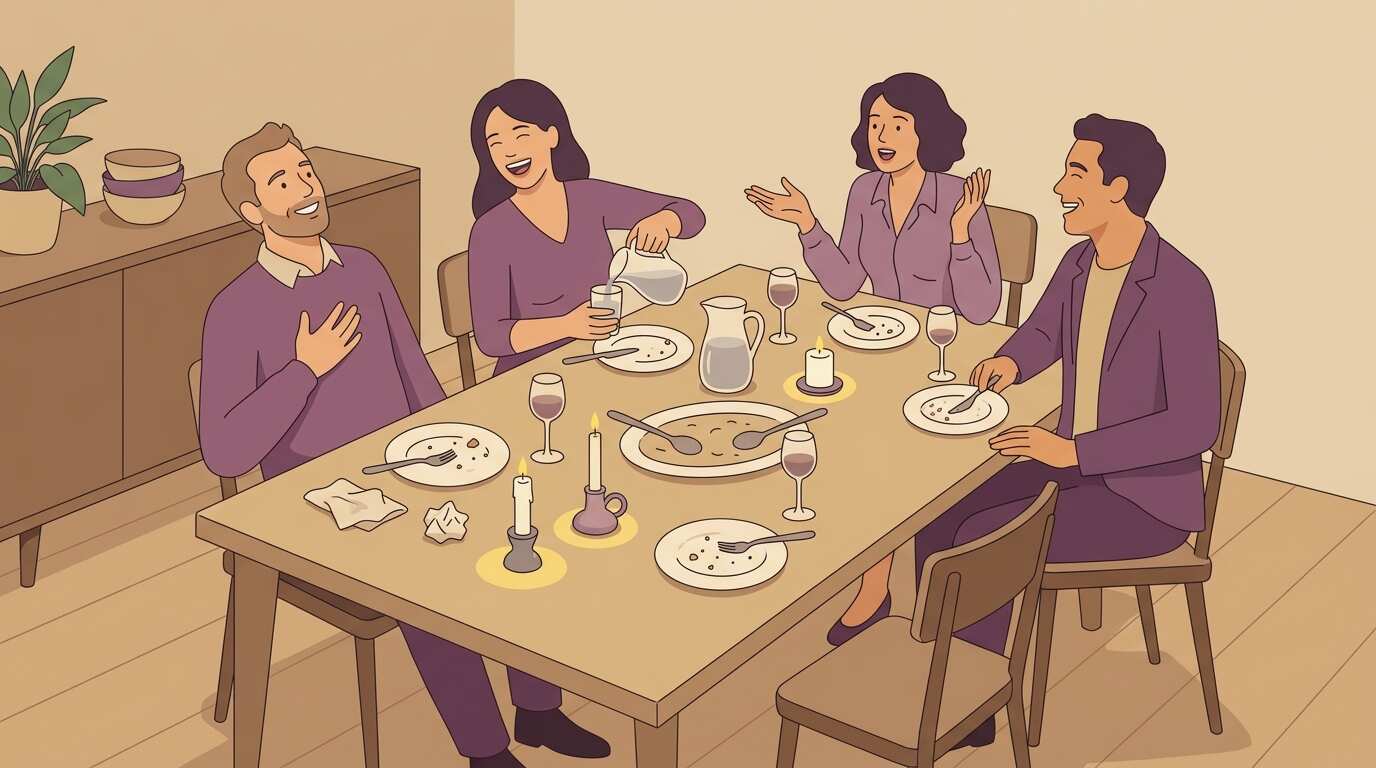
Couple friendships protect relationships by distributing emotional weight across a wider network. But finding them is hard because four people all need to click. The research says shared activities beat forced socializing, individual friendships matter just as much as couple ones, and isolated couples are at higher risk for burnout.
You used to make friends without thinking about it. School, college, your first job: friendships happened almost by accident, through proximity and shared experience. Then you coupled up, and something shifted. Your social life slowly contracted. Not because anyone decided it should, but because coordinating four adults' schedules and preferences is exponentially harder than coordinating two.
This is a recognized phenomenon in relationship research. Denise Julien and colleagues at the Universite du Quebec published a study in 2000 showing that the quality of a couple's social network directly predicts relationship satisfaction. Couples with strong shared friendships reported less conflict, more support during stress, and higher overall happiness. Couples who were socially isolated carried more emotional weight, because every need for connection, validation, fun, and support fell entirely on the romantic relationship.
That's a lot of pressure for two people to absorb.
Why is it so hard to make friends as a couple?
The math is brutal. When you're making a friend as an individual, two people need to click. When you're making friends as a couple, four people need to click, and not just in any combination. You need to enjoy the other couple together. Your partner needs to enjoy them. They each need to enjoy both of you. And the two people who aren't primary friends (say, your partner and the other person's partner) need to at least not dislike each other.
Geoffrey Greif, a professor at the University of Maryland School of Social Work, has written extensively about couple friendships. His research found that the most common reason couple friendships fail is a mismatch in one link of the four-way chain. You love hanging out with your friend, but your partner finds their partner insufferable. Or both couples get along fine in a group, but the friendship lacks depth because it's driven by only two of the four people.
There's also a timing problem. The window for making new friends narrows significantly after major life transitions: moving in together, having kids, changing jobs. Each transition reshuffles your available time and social energy. By the time you realize you're isolated, building new friendships feels like yet another obligation in an already full life.
Do couples actually need couple friends?
Yes. But not for the reasons people usually assume.
The value of couple friendships is having other people who understand the specific reality of being in a committed relationship. Your single friends can't relate to the midnight argument about whose turn it is to handle the baby. Your work friends don't see you as part of a unit. Couple friends provide a unique kind of social support: they normalize the mundane difficulties of partnership, they model different ways of relating, and they give each partner a social context that includes (rather than excludes) the relationship.
Julien's research showed that couples with shared friendships had a stronger sense of "we-ness," a shared identity that goes beyond two individuals who happen to live together. Seeing your relationship reflected in a social context reinforces the idea that you're a team, not just two people splitting rent.
But here's the counterpoint, and it matters: individual friendships are just as important. Beverly Fehr, a psychologist at the University of Winnipeg, conducted research in the mid-1990s showing that individual friendships predict personal wellbeing independent of romantic relationship quality. Your partner cannot be your only friend. They shouldn't be. When they are, every social and emotional need lands on one person, and that person will eventually buckle under the weight.
The healthiest setup, according to the research, is a mix. Some shared friends, some individual friends. The couple friends give you social connection as a unit. The individual friends give you breathing room, perspective, and a sense of self that exists outside the relationship. If you need a refresher on why that matters, the piece on maintaining your identity in a relationship gets into it.
Where do you find couple friends?
Not at bars or large parties. Research on adult friendship formation consistently points to the same ingredients that made childhood friendships work: repeated unstructured contact and shared activity.
Activity-based groups. Hiking clubs, running groups, recreational sports leagues, cooking classes, volunteer organizations. The activity gives you something to do together that isn't just talking, which takes the pressure off. You bond sideways, through shared experience, rather than face-to-face through forced conversation. Over time, the couples you keep running into become the couples you invite over.
Parent groups. If you have kids, this is the single most common path to couple friendships. Playgroups, school events, sports sidelines: you're already in the same place at the same time, and you already have something significant in common. The friendship often starts between the parents who are present (frequently moms in heterosexual couples), and expands to include the other partners once it gets past the acquaintance stage.
Neighborhood. Proximity still works in adulthood. The couple next door, the people down the street who also walk their dog at 7am. Low-stakes, repeated contact is how these connections start. A wave becomes a conversation becomes a backyard hangout becomes a real friendship. Don't underestimate the power of just being around.
Through existing friends. Your individual friends have partners. Some of those partners are people your partner would actually like. Cross-pollinating friend groups is one of the most natural paths to couple friendships, because at least one link in the four-way chain is already established.
Apps and platforms. Peanut (originally for moms, now broader), Bumble BFF, and local community apps like Nextdoor can work. The success rate is lower than organic connections because you're skipping the repeated-contact phase, but for couples who've moved to a new city or whose existing social networks have scattered, it's worth trying.
How do you do a "couple date" without it being awkward?
The first couple hangout is always a little weird. You're essentially on a double date where both couples are auditioning each other. A few things make it less stilted.
Pick an activity, not just dinner. Sitting across a table from near-strangers for two hours with nothing to do except talk is high-pressure. A board game night, a cooking class, a hike, a farmers market visit: anything that gives you something to focus on besides the conversation. The conversation will happen naturally around the activity.
Keep the first one short. Two to three hours, max. Leave while everyone's still having fun. A long first hangout increases the odds that the energy dips and someone has a bad time. Better to end on a high note and schedule another one.
Split up occasionally during the hangout. This is counterintuitive, but it works. Let the four-way conversation break into two-person pairs naturally. When the whole group is together, conversation tends to be surface-level. When you're briefly one-on-one with the other person, you can connect more genuinely. It also gives each partner a chance to form their own opinion rather than deferring to yours.
Don't force your partner. If your partner doesn't want to go, dragging them along will make the evening worse, not better. The piece on introvert-extrovert dynamics is relevant here: different social energy levels are normal, and pushing past them breeds resentment.
What if one partner is more social than the other?
This is one of the most common friction points in couple social lives. One partner wants to go out every weekend. The other wants to stay home. Neither position is wrong, but the mismatch creates a recurring argument.
The research on introversion and extroversion in couples suggests that the solution is differentiation, not compromise in the traditional sense (going out every other weekend when neither person is happy). The more social partner goes out sometimes without the other. The less social partner joins for the events that matter most. And both partners accept that their social needs are different without treating the difference as a deficiency.
What doesn't work: the social partner giving up their social life to keep the peace. That leads to isolation and resentment. Also doesn't work: the quieter partner forcing themselves to attend everything and burning out. Both patterns sacrifice one person's needs for the other's comfort.
The practical middle ground: agree on a minimum. Maybe one couple hangout per month is non-negotiable for both partners. Beyond that, the more social partner is free to make plans that the other can opt into or out of without guilt. This requires genuine acceptance from both sides, not just tolerance.
How does the friendship recession affect couples?
The term "friendship recession" describes a well-documented trend: adults in developed countries have fewer close friends than they did twenty or thirty years ago. The American Survey Center reported in 2021 that the percentage of Americans with no close friends quadrupled between 1990 and 2021.
For couples, this means the romantic relationship carries more emotional weight than it was ever designed to hold. Eli Finkel at Northwestern has written about this in The All-or-Nothing Marriage. Modern couples expect their partner to be their lover, best friend, therapist, co-parent, financial partner, adventure buddy, and intellectual equal. That's too many roles for one person.
When couples have friends, both shared and individual, those roles get distributed. You vent to your best friend about work so your partner doesn't have to absorb every frustration. You plan a date night that's actually about the two of you, not about filling the social void. You come home from a dinner with friends energized, with new things to talk about, instead of turning to your partner as the sole source of stimulation.
Isolated couples don't just miss out on fun. They're at higher risk for relationship burnout, because every unmet social need becomes a relationship problem. "We never do anything" is often code for "I have no social life and I'm blaming us."
How do you maintain couple friendships once you have them?
The same way you maintain any friendship: regular contact, initiative, and follow-through. But with couple friendships, there's an additional layer. Both partners need to invest.
If one partner is doing all the planning and texting and the other just shows up, the friendship becomes "your" friends, not "our" friends. That's fine for individual friendships, but couple friendships need both people to feel ownership.
Practical rhythms that work: a standing monthly dinner or activity. A group text that stays active between hangouts. Shared experiences that create memories (trips, events, traditions). And the willingness to show up even when you're tired, because the activation energy of socializing is almost always higher than the actual energy it takes once you're there.
Aperi gives couples a daily question to keep their own conversation deep, but some of the best conversations happen when you bring those questions to a dinner with friends. What started as a couple exercise can turn into the kind of evening where everyone's still talking at midnight.
FAQ
How many couple friends do you actually need?
Research on social networks suggests that most people maintain about five close friendships at any given time. For couples, two to three close couple friendships plus individual friendships for each partner is a solid target. You don't need a massive social circle. You need a few people you can call when things are hard, celebrate with when things are good, and sit comfortably with when nothing particular is happening. Quality matters far more than quantity.
What do you do when you like one half of a couple but not the other?
This is the most common couple-friendship problem. You have three options. First, maintain the friendship as an individual one: see your friend solo and don't force the couple dynamic. Second, find group settings (larger parties, group activities) where the less-compatible person is diluted by other people. Third, accept that it won't be a couple friendship and stop trying to make it one. Forcing your partner to spend time with someone they don't enjoy will create resentment toward you, not affection toward the other person.
Is it a red flag if your partner doesn't want any couple friends?
Not necessarily. Some people are genuinely content with a small social world. But if your partner actively resists all social connection, it's worth exploring why. Sometimes it's introversion, which is a personality trait, not a problem. Sometimes it's social anxiety, which is treatable. Sometimes it's a control dynamic: isolating a partner from friends is a hallmark of unhealthy relationships. The distinction matters. If your partner is happy with a quiet life and you can get your social needs met individually, that's fine. If they're preventing you from having any social life at all, that's different.
How do you make friends as a couple after moving to a new city?
Say yes to everything for the first six months. Every invitation, every neighborhood event, every work happy hour. You're building a pipeline: most of these contacts won't become friends, but some will, and you can't predict which ones in advance. Join something recurring (a gym class, a volunteer crew, a hobby group) so you see the same people weekly. And tell people you're new. Most people are happy to include newcomers; they just need to know you're looking.
Aperi: one question a day
A daily question app that adapts to you and your partner, and goes deeper the more you use it.


Free to start. Available on iPhone and Android.
Explore question packs
Related articles
Rituals of connection: the small acts that hold relationships together
Relationship rituals are more than habits. They are how couples create identity, predictability, and meaning. How to build ones that last.
Being alone together without feeling lonely
Parallel presence is a sign of security, not disconnection. How to share space without sharing every activity.
Why couples stop having fun together
Fun in relationships fades because of logistics and hedonic adaptation. Here is why play matters and how to bring it back.
Reconnecting after having a baby
Realistic ways to reconnect with your partner after a baby, based on Gottman and habit research. Written for people running on no sleep.
Feeling close when you're both exhausted
Exhausted couples don't need date nights. They need 5-minute micro-connection strategies backed by Gottman's 'small things often' research.

Evening rituals for couples: how to end the day connected
Eight evening rituals backed by research to help couples transition from work mode to connection. Specific how-tos included.