
Key Takeaways
Job loss strips away more than income. It removes structure, purpose, social contact, and identity. Research on unemployment's psychological effects explains why your partner may be struggling beyond the obvious. What they need most is validation and patience, not solutions and timelines.
When your partner loses their job, the first instinct is to help. Start forwarding job listings. Suggest updating their resume. Offer to connect them with your network. Ask every evening how the search is going.
All of this feels supportive. Most of it isn't.
The gap between what feels helpful and what actually helps is wider with job loss than with almost any other relationship stressor. That's because job loss isn't primarily a logistical problem. It's an identity crisis. And identity crises don't respond well to action plans.
Why does job loss hit harder than "just" losing income?
Marie Jahoda was an Austrian social psychologist who studied unemployed communities in the 1930s. Her work produced a framework called the latent deprivation model, which identifies five psychological benefits that employment provides beyond a paycheck: time structure, social contact outside the family, participation in collective purpose, personal status and identity, and regular activity.
When someone loses their job, they lose all five at once. The paycheck is the manifest function, the obvious one. The latent functions are less visible but often more psychologically damaging to lose.
Think about what a typical workday provides. You wake up at a certain time. You go somewhere. You interact with people who aren't your family. You contribute to something larger than yourself. You have a role, a title, a place in a hierarchy. You do things.
Now remove all of that. Your alarm is optional. You have nowhere to be. Your social world contracts to your household. Your sense of purpose evaporates. You have no role. And the thing you "do" all day is search for a way to get it all back.
This is why your partner might be acting differently than you expect. They're not just worried about money (though they probably are). They're experiencing a loss of self. And that loss often manifests as withdrawal, irritability, shame, disrupted sleep, loss of motivation, and difficulty concentrating. These symptoms look a lot like depression because, in many cases, they are.
Does the "breadwinner" identity make job loss worse?
It can. And the research on this is worth understanding, even though the dynamics are shifting with each generation.
Anne Winkler's 2002 research on male unemployment and marital stability found that job loss was more destabilizing for relationships when the unemployed partner was the primary earner, and particularly when the unemployed partner was male. The breadwinner identity, still deeply embedded in many cultures, creates an additional layer of shame when it's disrupted. The person doesn't just feel unemployed. They feel like they've failed at their fundamental role.
This dynamic isn't exclusive to heterosexual couples or to men. Anyone who has internalized the role of "provider," regardless of gender, can experience job loss as a moral failure rather than an economic event. And that internalization changes how they respond to support. Offers of help feel like confirmation of their inadequacy. Questions about the job search feel like accountability checks. Encouragement feels patronizing.
If your partner's identity was significantly tied to their career, understand that their grief is about more than the job itself. They're grieving who they thought they were. That requires patience, not productivity tips.
What does your partner actually need from you?
Validation, not solutions. Patience, not pressure. Presence, not project management.
Validation means acknowledging the emotional reality of what they're experiencing. "This is really hard. I'm sorry you're going through this." Not "at least you have time to figure out what you really want" or "this could be a blessing in disguise." Those reframings might be true eventually. Right now, they feel dismissive. Your partner knows the situation could have silver linings. They're not ready to look for them yet.
Patience means accepting that the job search will take longer than either of you wants, and that your partner's capacity to search will vary. Some days they'll send out ten applications. Other days they won't get off the couch. Both are part of the process. Unemployment research consistently shows that job search intensity follows a non-linear pattern: it tends to be high immediately after the loss, drops as rejections accumulate, and requires intentional rebuilding of momentum. Expecting constant high output from your partner isn't realistic and adds pressure to an already pressurized situation.
Presence means being available without being intrusive. Check in, but don't interrogate. "How are you doing today?" is different from "Did you apply anywhere today?" The first asks about the person. The second asks about the performance. Your partner can tell the difference.
What should you absolutely not say?
Some of the most common "supportive" statements are the most damaging.
"Just apply everywhere." This sounds like practical advice. It communicates: you're not trying hard enough, and the solution is quantity over quality. Most unemployed people are already applying to more positions than they'd like. Suggesting they do more implies they're being lazy or too selective.
"At least you have free time now." This reframes a loss as a perk, which is invalidating. The "free time" your partner has is contaminated by anxiety, shame, and the pressure to use every waking moment productively. It's not a vacation.
"My friend's company is hiring." Unless your partner asks for leads, unsolicited job suggestions communicate that you think you know better than they do what jobs they should be pursuing. Ask first: "Would it be helpful if I keep an eye out for openings, or would you rather manage the search yourself?" Let them decide.
"We need to talk about our finances." The financial conversation is necessary. But timing and framing matter enormously. Leading with "we need to talk" in the first week signals panic. It tells your partner that your primary concern is the money, not their wellbeing. Wait until the initial shock passes, then frame it as a collaborative planning conversation, not an emergency meeting.
"When do you think you'll find something?" Nobody knows. Asking for a timeline implies that the unemployment has an acceptable duration and your patience has an expiration date. Even if that's true, saying it out loud turns your partner's job search into a performance with an audience (you) and adds anxiety to a process that's already full of it.
How do you have the money conversation without creating blame?
You have to have it. That's not optional. But how you have it determines whether it brings you together or drives a wedge.
Wait at least a week or two after the job loss, unless there's a genuine emergency. The initial period is for processing, not planning.
When you do have the conversation, start with "we" language, not "you" language. "We need to figure out our finances for the next few months" is different from "You need to start being more careful with money." The first frames it as a shared challenge. The second assigns fault.
Come with information, not conclusions. "Here's what our monthly expenses look like, and here's how long our savings will cover them" is a starting point for discussion. "We need to cut eating out, cancel your gym membership, and sell the car" is a unilateral decision disguised as a conversation.
Be specific about what financial changes you're proposing, and be willing to make sacrifices yourself. If only the unemployed partner is expected to cut back, it creates a punitive dynamic, as if unemployment is a transgression that requires penance. Both of you adjusting communicates that this is a shared problem with shared solutions.
And separate the financial conversation from the emotional one. Don't bundle "how are you feeling" with "how are we paying the mortgage." They're different conversations that require different emotional registers, and combining them guarantees both will go badly.
How do you avoid a power imbalance when one partner earns and the other doesn't?
This is one of the trickiest dynamics of partner unemployment. The earning partner can easily, and often unconsciously, shift into a parental role: monitoring spending, controlling decisions, making pronouncements about what the couple can and can't afford. The unemployed partner, already dealing with shame, becomes a dependent asking for permission.
This dynamic is toxic, and it can set in faster than either person realizes.
Guarding against it requires intentional practices. Keep financial decisions collaborative, not unilateral. The person earning the money doesn't automatically get more say in how it's spent. Continue to discuss purchases, budgets, and priorities as equals. If the unemployed partner wants to buy something and the earning partner thinks it's unwise, that's a discussion, not a veto.
Watch your language. "I'm paying for everything right now," even if technically true, turns financial contribution into relational power. Your partner didn't choose to be unemployed. Reminding them of the asymmetry doesn't motivate. It humiliates.
And recognize the non-financial contributions your partner is probably making. If they're handling more housework, childcare, or household logistics during the unemployment, that has economic value even if it doesn't come with a paycheck. Acknowledging those contributions explicitly, like "I really appreciate that you've been handling the cooking and errands while I'm working," counteracts the implicit devaluation that comes with being the "non-earning" partner.
How do you protect the relationship from the stress spillover?
Unemployment stress doesn't stay contained to the job search. It leaks into everything: sleep, mood, sex, patience, communication. Research on stress crossover (how one partner's stress transmits to the other) shows that unemployment stress is particularly contagious in relationships. When one partner is stressed about not having a job, the other partner absorbs that stress and reflects it back.
Breaking this cycle requires a few things.
Maintain some normalcy. Keep doing the things that sustain your relationship. Date nights (even cheap ones). Physical affection. Conversations that aren't about the job search. The relationship needs to be a refuge from the stress, not another arena where the stress plays out.
Set boundaries around job search talk. Designate times when the job search is on the table and times when it's not. Without boundaries, every interaction becomes an opportunity to ask about applications, which makes the relationship feel like a performance review. Sunday afternoon updates might be enough. Your partner will share good news when it happens.
Take care of yourself. Supporting an unemployed partner is draining. Your feelings are legitimate and deserve attention. Talk to a friend, a therapist, or a trusted person outside the relationship. Don't dump your anxiety on the person who's already carrying the heaviest load.
Watch for depression. Unemployment is a significant risk factor for clinical depression. If your partner's functioning deteriorates over weeks (not sleeping, not eating, withdrawing from everything, expressing hopelessness), that's beyond normal job-loss distress. Gently suggesting professional support at that point isn't overstepping. It's being a good partner.
What about the timeline?
The average job search takes three to six months. Some take longer. The uncertainty is one of the hardest parts for both partners: each week without progress erodes the job-seeker's confidence, and the open-endedness creates anxiety the supporting partner struggles to contain.
Agree on a cadence for reviewing the situation together. Monthly, perhaps. Both of you honestly assess how the search is going, how the finances look, and how each of you is doing emotionally. This creates a container for the anxiety instead of letting it leak out in daily micro-comments.
Build in milestones that aren't about getting a job. "I'm going to reach out to five people in my network this week" or "I'm going to take a course to fill a skills gap" gives the unemployed partner a sense of agency that doesn't depend on an employer's response.
The relationship test you didn't ask for
Job loss is one of those life events that reveals the actual operating system of a relationship. How you handle money, power, vulnerability, and patience when things are hard tells you more about your partnership than years of stability ever could.
The couples who come through job loss stronger aren't the ones who never fought about it. They're the ones who treated the situation as something happening to both of them, not something one person caused and the other had to endure. They're the ones who asked, "What do you need from me right now?" and actually listened to the answer.
Asking your partner a real question each day, something unrelated to the job search, something about who they are rather than what they're doing, is a small act that carries outsized weight during unemployment. It says: you are not your job. You are not your productivity. You are a person I'm interested in, employed or not.
Frequently asked questions
How long should I wait before bringing up finances after a job loss?
Give it at least a week or two unless there's an immediate financial emergency. The first days after a job loss are about processing the shock and the emotional weight. Jumping to financial planning too quickly signals that money is your primary concern. When you do bring it up, frame it as collaborative planning ("let's figure out our budget together for the next few months"), not crisis management.
What if the job search is going on for months and I'm getting frustrated?
Your frustration is valid. Living with financial uncertainty and watching your partner struggle is exhausting. But expressing frustration to your partner, who is likely even more frustrated than you, adds pressure without helping. Talk to a friend, therapist, or family member about your feelings. With your partner, focus on the stress management conversation rather than the job search itself. And check whether your frustration is really about the timeline or about something deeper: a feeling of unfairness, fear about the future, or unresolved financial disagreements.
Should I help with their job search or stay out of it?
Ask, don't assume. Some people want active help: reviewing resumes, preparing for interviews, sharing job leads. Others experience unsolicited help as intrusion or judgment. A simple "what kind of support would be most helpful from me right now?" respects your partner's autonomy while making clear that you're available. And be prepared for the answer to change week to week.
What if job loss is causing my partner to withdraw from me emotionally?
Withdrawal during job loss is common and usually driven by shame, not disinterest in the relationship. Pushing for emotional connection when your partner is withdrawing tends to backfire. Instead, stay physically present and emotionally available without requiring reciprocation. Small gestures, like making their favorite meal or sitting together without requiring conversation, keep the connection alive without adding pressure. If the withdrawal persists for weeks and deepens, that may be a sign of depression that warrants professional attention.
Aperi: one question a day
A daily question app that adapts to you and your partner, and goes deeper the more you use it.


Free to start. Available on iPhone and Android.
Explore question packs
Related articles
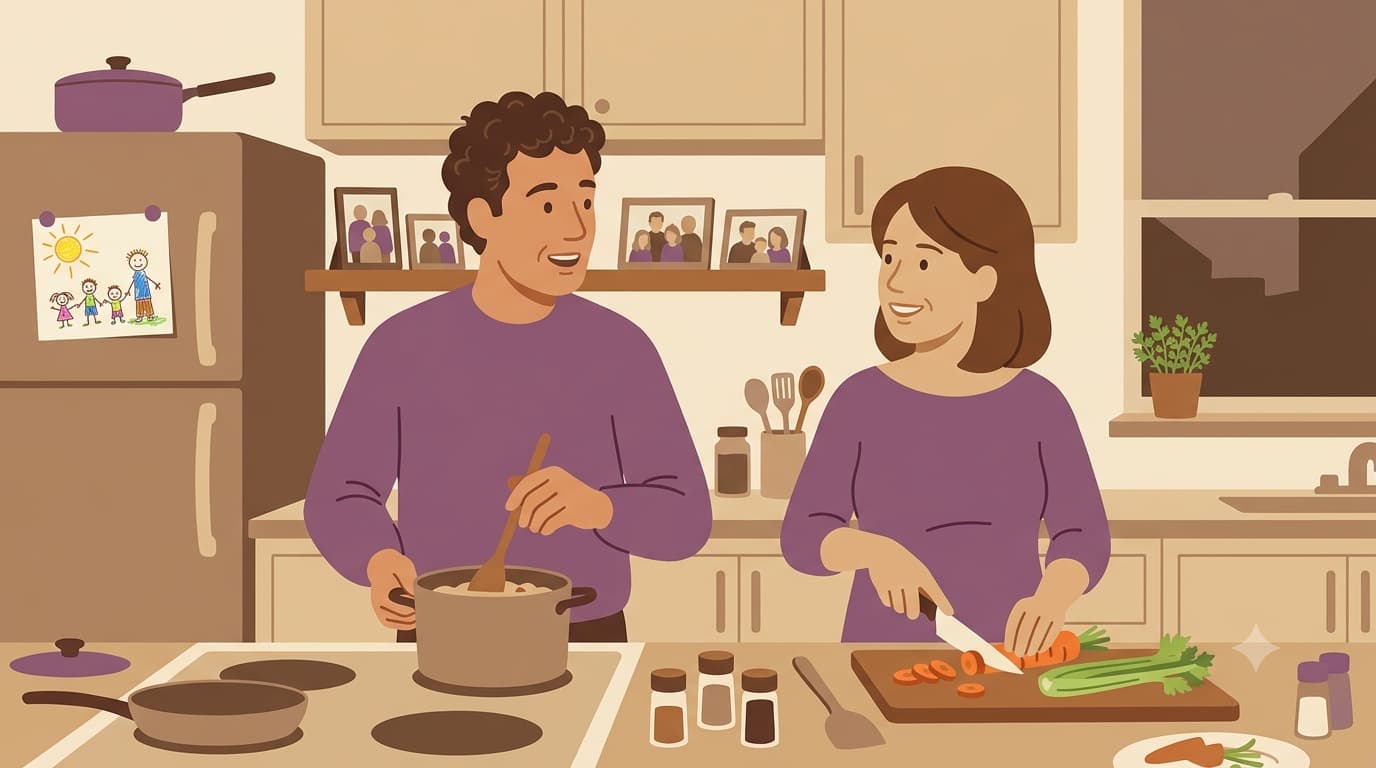
Communication in marriage: how the years change the conversation
Communication in marriage erodes through efficiency, not conflict. What the years change, which patterns predict real trouble, and what daily practice looks like.
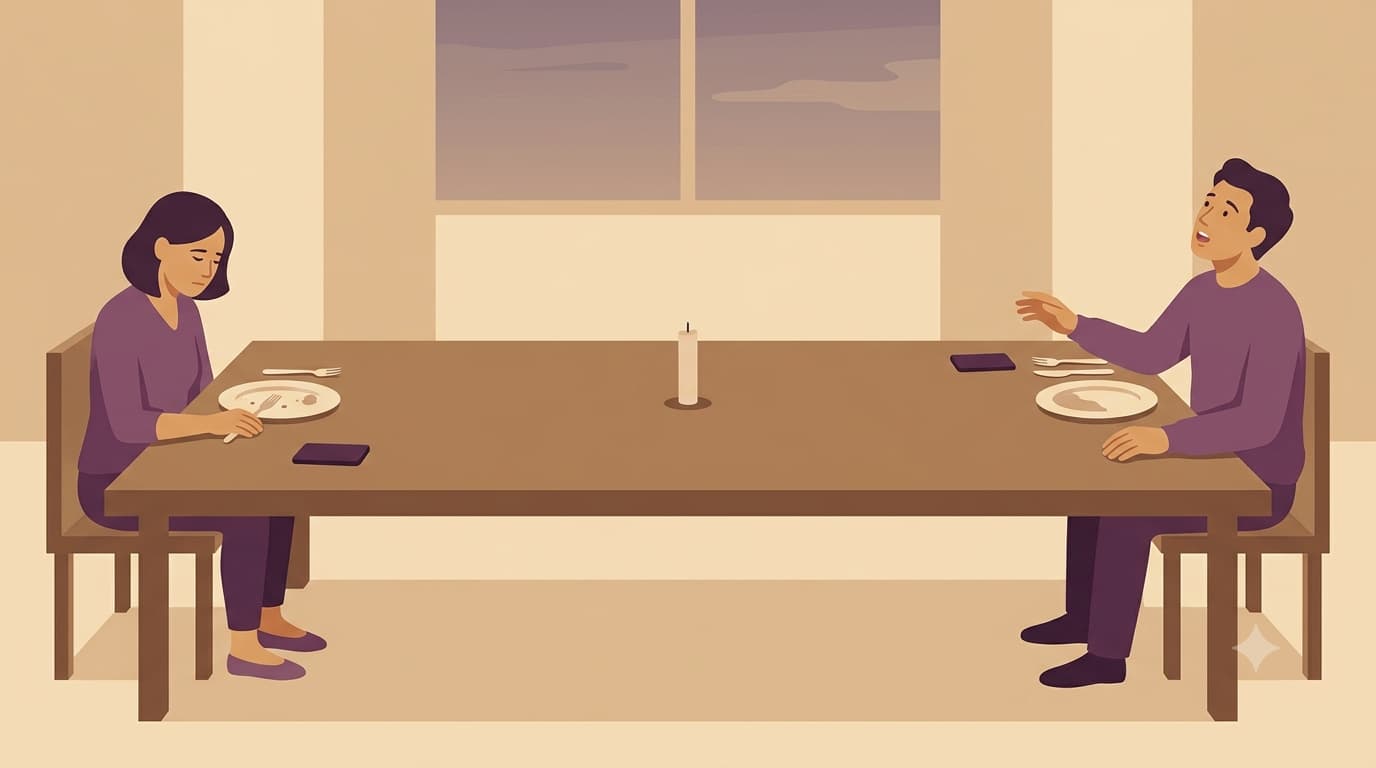
Lack of communication in a relationship is rarely a skills problem
Lack of communication in a relationship: what the breakdown looks like in practice, what causes it (rarely skills), and the scripts that rebuild it.

50 couples therapy questions, in the order a therapist would ask them
50 couples therapy questions sequenced like a real session: history, patterns, needs, repair, future. Plus an honest look at when a list is not enough.

When you and your partner speak different love languages
You show love your way, not theirs. How to close the gap when you and your partner express affection differently, beyond the quiz.

Working with your partner: boundaries that save your relationship
When your partner is also your colleague, role confusion and power dynamics can erode the relationship. How to set boundaries that protect both.

When your partner travels for work
Work travel creates an asymmetry that regular long-distance advice ignores. What actually helps couples stay connected when one partner is always away.