Key Takeaways
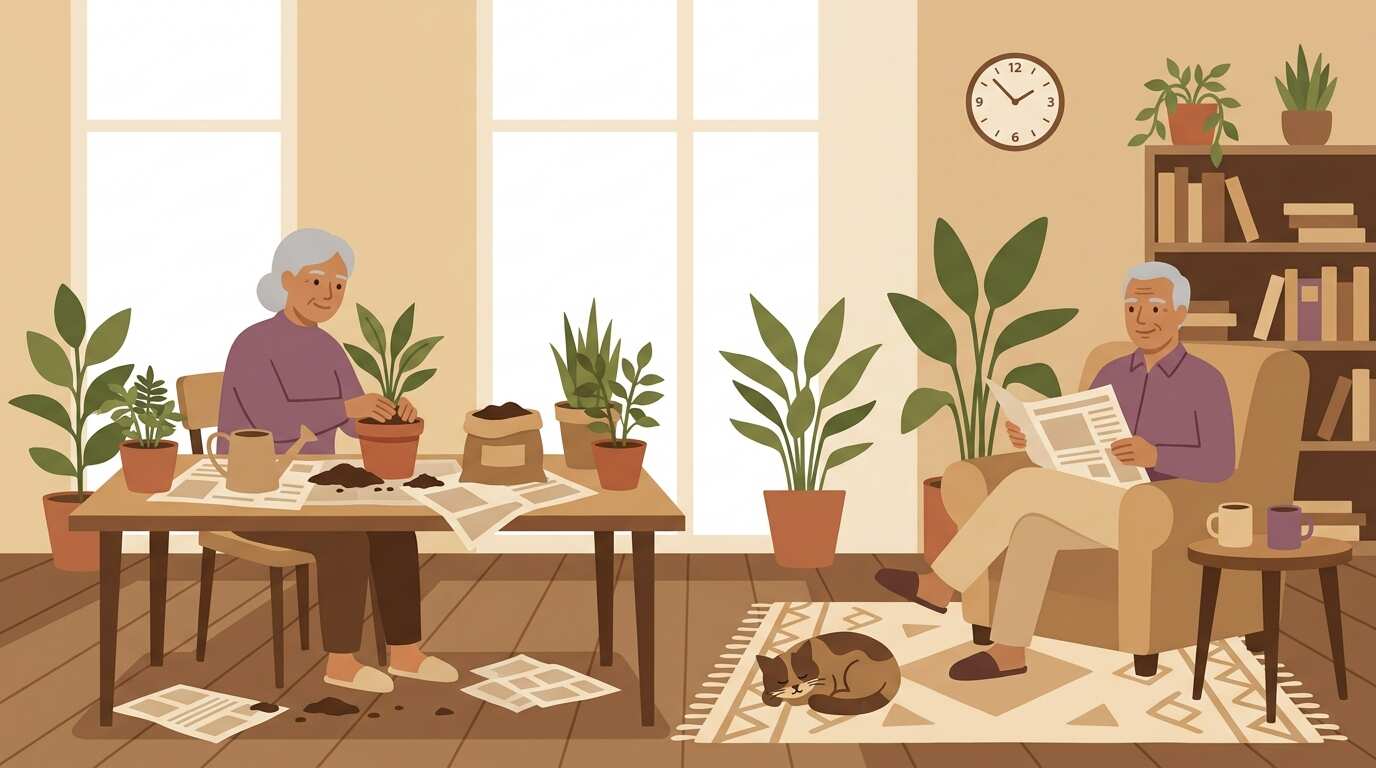
Retirement is a relationship transition, not just a financial one. Research shows it can increase couple conflict, especially when partners retire at different times. The couples who thrive in retirement are the ones who plan for togetherness as deliberately as they plan for finances.
Most retirement planning focuses on money. How much do you need? When can you afford to stop working? What about healthcare costs, inflation, tax-advantaged withdrawals?
These are important questions. They're also not the ones that determine whether retirement makes your relationship better or worse.
The biggest retirement adjustment isn't financial. It's relational. You go from spending 8-10 hours a day apart, with separate routines, separate colleagues, separate worlds, to being together all the time. And "all the time" means something very different when it's voluntary and planned versus when it just happens because neither of you has anywhere else to be.
Phyllis Moen and her colleagues at Cornell published research in 2001 showing that retirement increased marital conflict, particularly when one spouse retired before the other. The asymmetry created tension: the retired partner wanted companionship and shared time; the still-working partner felt pressure and resentment. Even when both retired simultaneously, the transition required a complete renegotiation of how the couple spent their days, divided responsibilities, and occupied shared space.
The couples who planned for this, who talked about the relational aspects of retirement as seriously as the financial ones, fared significantly better. The ones who didn't often found themselves blindsided by problems they never saw coming.
Why does "too much togetherness" become a problem?
It sounds wrong. You love your partner. You chose to build a life with them. How could spending more time together be a problem?
Because most long-term relationships have been structured around absence. You leave in the morning, live separate lives for most of the day, and reconvene in the evening. That rhythm creates natural breathing room. You don't have to negotiate every hour. You have space for your own thoughts, your own pace, your own minor irritations that dissolve before you get home.
Retirement eliminates that buffer. Suddenly, your partner's habit of humming while reading the newspaper isn't a minor quirk you hear for ten minutes at breakfast. It's the soundtrack to your entire morning. Every day. The things you could overlook when exposure was limited become inescapable when exposure is constant.
This comes down to the basic human need for autonomy, not a lack of love. Self-Determination Theory, developed by Edward Deci and Richard Ryan, identifies autonomy as one of three fundamental psychological needs (along with competence and relatedness). When retirement collapses two people's lives into a single undifferentiated space, autonomy takes a hit. And when autonomy suffers, resentment follows.
The fix isn't complicated, but it does need to be intentional. Separate spaces, separate activities, separate friendships, separate routines. Not as a rejection of togetherness, but as a way to make togetherness meaningful rather than default.
What happens to identity when work disappears?
For many people, particularly those who built their sense of self around their careers, retirement triggers an identity crisis. You were a teacher, an engineer, a manager, a doctor. Now you're... retired. The word itself is passive. It describes what you've stopped doing, not what you're doing.
Marie Jahoda's latent deprivation model, developed through her research on unemployment in the 1930s, identified five latent functions that work provides beyond income: time structure, social contact, collective purpose, status/identity, and regular activity. Retirement strips away all five simultaneously. Even when the financial transition is smooth, the psychological transition can be severe.
This identity loss doesn't stay contained. It spills into the relationship. A partner who has lost their sense of purpose may become withdrawn, irritable, or clingy. They may look to the relationship to fill the void that work left, expecting their partner to provide the structure, social stimulation, and meaning that their job used to supply. That's a weight no relationship can carry alone.
The partners who handle retirement identity loss best are the ones who start building a post-career identity before they retire. Volunteer work. Community involvement. A serious hobby. Teaching or mentoring. Something that provides structure, purpose, and social connection independent of both work and the relationship.
How do you renegotiate who does what?
During working years, household roles tend to settle into patterns. Often these patterns aren't perfectly equal, but they function. One person handles the finances, the other handles the cooking. One manages the social calendar, the other manages home maintenance. The division might be gendered, practical, or just based on who got annoyed first and started doing the thing.
Retirement destabilizes all of it.
The person who was home more may have handled most of the domestic work. Now both people are home. Does the division stay the same? The person who handled finances while working might expect to keep that role. But the other partner, now with time and interest, might want involvement. These aren't just logistical questions. They're power questions. And power negotiations that go unspoken tend to go badly.
Research by Szinovacz and Davey (2005) found that the transition to retirement significantly affected the division of household labor, and that mismatches between expectations and reality were a primary source of post-retirement conflict. When one partner expected retirement to bring a more equal division of chores and the other expected things to stay the same, the disappointment created friction that was disproportionate to the actual issue of who vacuums the living room.
The conversation that needs to happen, and rarely does, is explicit: what do we each want our days to look like? What tasks are each of us willing to do? What's the new division, and how do we check in about whether it's working? Having a weekly relationship check-in becomes even more valuable in retirement, because the daily rhythms are no longer externally imposed.
Does retirement improve or damage relationships?
Both. The research is genuinely mixed, and the reason for the inconsistency is instructive.
A longitudinal study by Moen, Kim, and Hofmeister (2001) found that retirement quality, not retirement itself, predicted marital quality. Couples who experienced retirement as a positive transition (feeling free, purposeful, engaged) saw their relationship improve. Couples who experienced it as a loss (feeling aimless, bored, useless) saw their relationship decline.
The single strongest predictor of which camp you'd land in? The quality of the relationship before retirement.
Couples who were strong going into retirement got stronger. They had more time for each other, fewer external stressors, and the relational skills to manage the transition. Couples who were struggling before retirement got worse. The problems they'd been too busy to address suddenly had nowhere to hide.
This is why retirement planning needs to include relationship planning. If there are unresolved conflicts, chronic resentments, or communication breakdowns, the runway to retirement is the time to address them. Not after, when you're living in them 24 hours a day.
How does money change when both of you are home?
The financial dimension of retirement is well-covered elsewhere, but the relational aspects of post-retirement finances deserve attention.
During working years, earning creates a certain relational dynamic. If both partners work, there's a sense of shared contribution. If one earns significantly more, there may be an implicit power imbalance, spoken or not. When paychecks stop, that dynamic shifts.
Fixed-income living changes spending psychology. Every purchase feels more consequential when the income stream is finite. And if one partner is a spender and the other is a saver, a common dynamic that's manageable during earning years, retirement amplifies the tension. The saver feels anxious about every restaurant meal. The spender feels controlled and deprived.
The conversation about money in retirement isn't just about budgets. It's about values, priorities, and fears. What does financial security mean to each of you? What spending feels essential versus optional? What would it take for each of you to feel comfortable rather than anxious? This is an extension of the money conversations that every couple needs, but with higher stakes.
What's the "retired husband syndrome"?
The term originated in Japan ("shujin zaitaku sutoresu shoukougun"), where wives reported increased depression, anxiety, and psychosomatic symptoms after their husbands retired. The pattern isn't uniquely Japanese, though. It shows up whenever one partner, typically the one who spent less time at home during working years, suddenly occupies the home space full-time without adapting to its existing rhythms.
The issue isn't the person. It's the disruption. The partner who managed the home had routines, spaces, and a pace of life that worked. The newly retired partner arrives and, often without realizing it, disrupts all of it. They follow their spouse around. They offer opinions on how things should be done. They're underfoot, bored, and looking for connection in a space that was someone else's domain.
The antidote is awareness and boundaries. The newly retired partner needs their own space, their own activities, and a genuine respect for the home routines that existed before they were there all day. The at-home partner needs to communicate what they need rather than silently building resentment. Both need to approach the transition as a project they're working on together, not a problem caused by one person.
How do you plan for retirement as a couple?
Financial advisors will tell you to start planning for retirement 10-15 years in advance. Relationship therapists would give you the same timeline if anyone asked them. The relational planning involves:
Talk about your visions separately first, then together. Each person should think about what they want their retired life to look like (daily structure, activities, social life, travel, purpose) before comparing notes. The gap between the two visions is where the negotiation happens.
Address the relationship issues now. If you're not communicating well at 55 while working, you won't suddenly communicate well at 65 while together all day. The things that are "fine" right now, meaning tolerable, not actually fine, will become intolerable under constant proximity. Deal with them while you still have the structure of work to provide breathing room.
Plan for separate activities. Couples who last maintain individual identities alongside their shared one. In retirement, this means each person needs things they do independently. A social network that isn't just "our friends." Hobbies that are yours, not ours. Time alone that isn't time apart from each other. It's time with yourself.
Discuss living space. If you're in a house designed for a family, it may not work for two retired adults who need separate space during the day. Some couples find that downsizing or reconfiguring their space is one of the most practically useful things they do for their retirement relationship.
Do a trial run. Take a long vacation together, two weeks or more, with no planned activities. Just be together with unstructured time. The dynamics that emerge will preview what retirement will feel like, and it's much cheaper to learn those lessons in a rental than after you've already signed the retirement papers.
The opportunity most couples miss
Retirement can be the best period of your relationship. You have time. You have experience. You know each other deeply. The pressures of career and child-rearing have lifted. This is the phase where everything you've built together can actually be enjoyed.
But only if you prepare for it as a relationship transition, not just a career transition. The couples who walk into retirement with a plan for how they'll spend their time, maintain their autonomy, share the load, and keep growing together are the ones who describe retirement as a second honeymoon rather than a slow decline.
A daily question practice might seem trivial compared to financial planning and healthcare decisions. But in retirement, when the days are long and unstructured, having one moment of genuine curiosity about your partner, one question that goes deeper than "what should we have for dinner?", can be the difference between a retirement that brings you closer and one that reveals how far apart you've drifted.
Frequently asked questions
What if one of us wants to retire and the other doesn't?
This is one of the most common retirement-related conflicts. Moen's research specifically found that asynchronous retirement, one partner retiring before the other, was a significant source of marital strain. The key is treating it as a joint decision with individual needs. The person who wants to retire may need to build an independent post-work identity first, rather than waiting for their partner to fill the social void. The person still working needs to feel that their continued work is respected, not resented. A timeline for the second retirement helps both partners feel like they're moving in the same direction.
How do you maintain boundaries when you're together all the time?
Physical boundaries: separate spaces in the home where each person can retreat. Temporal boundaries: blocks of time that are yours alone, not negotiated daily. Social boundaries: friendships and activities that don't always include your partner. Communicating these boundaries isn't rejection. It's preservation of the autonomy that makes you a good partner when you are together. Couples who struggle with this often benefit from creating a loose weekly schedule, not a rigid one, but enough structure to prevent the formless drift that makes every day feel the same.
Should we move to a new place when we retire?
Maybe, but don't assume a new location will fix relationship dynamics. Research on retirement relocation suggests that couples who move purely for climate or cost of living sometimes underestimate the loss of their social network and community. If you're considering a move, spend extended time in the new location first. And treat the decision as a commitment conversation about what kind of life you're building together, not just a real estate transaction.
What if retirement makes us realize we've grown apart?
It happens, and it's worth taking seriously rather than ignoring. If you look at each other across an empty nest and empty calendar and feel like strangers, that's information. It doesn't mean the relationship is over. It means it needs attention. Many couples find that retirement is when they finally do the work they've been postponing for decades. Couples therapy can provide structure for this process, and it's far more effective when both partners recognize the problem than when one is pretending everything is fine.
Aperi: one question a day
A daily question app that adapts to you and your partner, and goes deeper the more you use it.


Free to start. Available on iPhone and Android.
Explore question packs
Related articles
Relationship advice for your 40s and beyond
Your 40s bring a relationship shift from building to evaluating. Here's what the research says about midlife love, authenticity, and the second act.
Rediscovering your partner after the kids leave
When the kids leave, some couples fall apart and others come alive. The difference isn't luck. It's what happened in the years before.
What couples married 20+ years want you to know
Lessons from couples who've stayed together 20+ years, backed by research from Pillemer, Wallerstein, and Gottman.
The first year of marriage: what nobody tells you
The first year of marriage is harder than the wedding industry admits. Research on newlywed disillusionment and what year-one couples can do about it.
Relationship advice for your 30s: the decade that tests everything
Your 30s pile career, kids, money, and drift into one decade. Here's how to keep your relationship from becoming collateral damage.
Creating shared meaning in your relationship
Shared meaning is what separates parallel lives from a real partnership. How to build rituals, goals, and a story that belongs to both of you.